

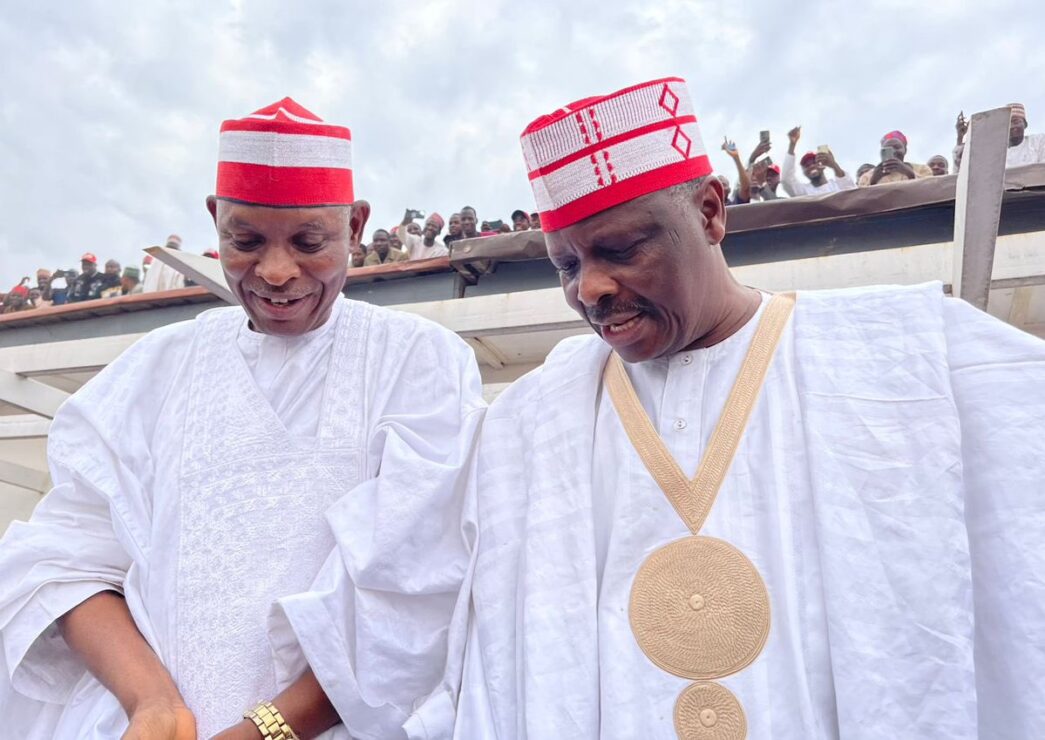

In a dramatic political shift with substantial implications for Kano State and Nigeria’s broader political landscape, Governor Abba Kabir Yusuf of Kano State has resigned from the New Nigeria Peoples Party (NNPP) and is set to formally join the ruling All Progressives Congress (APC) on Monday, January 26, 2026. This move, involving not only the governor but scores of lawmakers and local government officials, has deepened political fault lines and sparked intense debate across party lines.
Resignation from NNPP and Strategic Realignment
Governor Yusuf’s exit from the NNPP was confirmed in a formal letter tendered on 23 January 2026, in which he cited persistent internal disputes, leadership crises and legal battles that he said had weakened party cohesion and posed a risk to governance in Kano State. In his resignation letter addressed to his ward leadership, he expressed gratitude to the NNPP for the platform it provided but described his decision as one guided “strictly by public interest” to protect peace, unity and development in the state.
Yusuf’s resignation was not solitary. He left the NNPP alongside 21 members of the Kano State House of Assembly, eight federal lawmakers and all 44 local government chairmen in the state, signaling a mass political realignment behind his decision.
Joining the APC: Reasons and Political Rationale
Governor Yusuf is set to rejoin the APC on 26 January 2026, returning to a party he first joined in 2014. A statement issued by his spokesperson explained that the move was driven by “prevailing realities of governance, national cohesion and development” and described APC as a “familiar and structured platform for progressive governance.” Also highlighted was the desire to strengthen cooperation with the federal government, accelerate infrastructural development, enhance security coordination and improve service delivery across Kano State — priorities he argued would be better supported within the APC framework.
Political insiders and media reports suggest that months of internal strain within the NNPP — especially related to the influence of party leaders and the lack of autonomy in key appointments — played a significant role in motivating Yusuf’s decision to switch parties. In some accounts, the governor felt politically constrained within the NNPP, particularly in preparation for future electoral contests such as the 2027 governorship election.
Reactions and Party Responses
The governor’s defection has provoked strong reactions across the political spectrum:
- NNPP Leadership: The New Nigeria Peoples Party has described Yusuf’s resignation and planned defection as a “cold betrayal of sacred trust”. Senior party officials argued that the internal crisis cited by the governor was either exaggerated or a pretext, noting that the party recently conducted internal congresses and remained robust in parts of the state, including holding supplementary election victories in 2025. They expressed profound disappointment and warned that the move risked reversing political gains in Kano State.
- Political Critics: Some political figures have framed the defection as risky for Yusuf’s political future. Senator Rufai Sani Hanga, representing Kano Central, described the move as a “suicide mission” that could hamper Yusuf’s prospects, especially should he seek a second term under APC, where there is no guarantee of automatic party endorsement or ticket allocation.
- Support and Opposition: While some supporters have welcomed the governor’s realignment with the ruling party as a move that could unlock federal support and resources, others — including critics and aides who remain loyal to the NNPP and its leader Senator Rabiu Musa Kwankwaso — have resigned or publicly reaffirmed their loyalty to the Kwankwasiyya movement rather than transition with Yusuf.
Impact on Kano Politics and National Implications
Governor Yusuf’s defection represents a significant shift in Kano’s political terrain, long dominated by strong regional movements such as the Kwankwasiyya faction historically anchored in the NNPP and led by Rabiu Kwankwaso. The departure of the sitting governor and a large bloc of lawmakers weakens the NNPP’s foothold in the state and bolsters the APC’s influence ahead of the 2027 general elections.
The realignment also reflects broader trends in Nigerian politics, where politicians and political actors frequently shift allegiances ahead of major electoral cycles in pursuit of strategic positioning, federal alignment and access to resources. Analysts suggest that such movement — particularly toward the ruling APC — may translate into greater political stability in governance but also fuels debates around party loyalty, ideology and democratic consistency.
Governance and Leadership Dynamics
Beyond electoral strategy, Yusuf’s defection underscores deeper questions about intra-party democracy, power sharing and governance autonomy. Reports from political observers indicate that his initial time in the NNPP featured tensions over appointments and leadership influence, with limited control over key decisions despite holding executive office — a dynamic that some argue hindered effective governance and long-term planning, especially as the clock ticks toward the 2027 governorship race.
Looking Ahead
As Governor Yusuf prepares to formally join the APC and launch party e-registration exercises in Kano, the stage is set for further political mobilization. The realignment raises key questions for both parties:
- Can the APC consolidate and leverage this surge to solidify control in Kano ahead of 2027?
- Will the NNPP successfully reorganize and retain grassroots support without the governor’s leadership?
- How will voters react to what some see as a strategic switch versus others framing it as political betrayal?
Ultimately, the governor’s defection marks a poignant moment of political recalibration, testing both personal leadership stamina and the resilience of party structures in one of Nigeria’s most consequential states.