



A generation ago, moral lessons were learned mostly at the dinner table, in classrooms, in places of worship, and through face-to-face interactions in the community. Today, many of those lessons are being shaped on glowing screens. The internet, social media, smartphones, and artificial intelligence have transformed how young people encounter ideas, form opinions, relate to others, and understand the difference between right and wrong. A teenager can now receive guidance, validation, correction, or condemnation from strangers across the world in seconds. A child’s sense of empathy, honesty, respect, and responsibility is no longer shaped only by parents and teachers, but also by influencers, viral videos, trending challenges, gaming communities, and anonymous comment sections. In this digital landscape, moral education has not disappeared it has simply moved into a new, complex, and powerful arena.
Traditionally, moral education was grounded in close relationships and shared cultural norms. Families passed down values through stories, discipline, and example. Schools reinforced ideas of fairness, respect, and responsibility. Religious institutions and community elders provided moral frameworks rooted in belief systems and collective identity. These sources offered consistency and personal accountability because they operated within physical communities where actions had visible consequences. In the digital age, however, young people often spend more time interacting online than in these traditional spaces. They may look to social media personalities for guidance on lifestyle and attitudes, learn social norms from memes and trends, and engage in discussions with people they may never meet in real life. This shift does not eliminate traditional moral education, but it places it in constant competition with digital influences that are fast, attractive, and sometimes contradictory.
Digital platforms can shape character in both constructive and destructive ways. On one hand, the online world exposes young people to diverse cultures, ideas, and perspectives, broadening their understanding of humanity and encouraging empathy. A student in Nigeria can follow conversations about climate change, gender equality, or racial justice happening across the globe. They can join communities that promote kindness, creativity, and learning. Educational videos, online courses, and thoughtful discussions can strengthen critical thinking and moral reasoning. On the other hand, the same platforms can normalize disrespect, dishonesty, impatience, and cruelty. The quest for likes, followers, and virality can encourage attention-seeking behavior at the expense of integrity. The anonymity of the internet often reduces the sense of accountability that normally guides behavior in physical communities.
One of the most troubling challenges in the digital age is cyberbullying. Unlike traditional bullying, which is often limited to specific locations and times, cyberbullying can follow a young person everywhere. Hurtful comments, embarrassing images, and hateful messages can be shared widely and remain online indefinitely. This environment can desensitize young people to the pain of others, making cruelty seem like entertainment. Closely related is the issue of online peer pressure. Viral challenges, trends, and group expectations can push individuals to engage in harmful or irresponsible behaviors simply to fit in or gain recognition. In such situations, moral judgment can be overshadowed by the desire for acceptance and visibility.

Misinformation is another moral challenge of the digital age. Young people are constantly exposed to news, opinions, and content that may not be verified. Without strong critical thinking skills, they may unknowingly spread false information, contribute to panic, or form biased opinions. This weakens the values of honesty and responsibility. Similarly, “cancel culture” can encourage harsh judgment without understanding, promoting a mindset where mistakes are met with public shaming rather than learning and forgiveness. Privacy concerns also arise, as many users share personal information without understanding the long-term consequences, risking exploitation or manipulation.
Digital addiction further complicates moral development. Excessive screen time can reduce real-life interactions that teach empathy, patience, and social skills. When young people spend hours immersed in virtual environments, they may struggle to build meaningful relationships offline. The normalization of certain harmful behaviors—such as disrespectful language, risky pranks, or insensitive humor—can gradually blur the line between what is acceptable online and what is appropriate in real life. Over time, this can erode the moral compass that guides respectful and responsible behavior.
Yet, the digital world is not inherently negative. It also holds immense potential for moral growth. Online platforms can amplify voices that promote kindness, social responsibility, and positive change. Young people can learn about global humanitarian efforts, participate in charitable campaigns, and engage in discussions that challenge prejudice and ignorance. Access to knowledge has never been easier, allowing learners to explore philosophy, ethics, and social issues from multiple perspectives. Positive online communities can provide support, encouragement, and inspiration, especially for those who may feel isolated in their physical environments.
Given this reality, parents, educators, and society must intentionally adapt moral education to the digital environment. Teaching children simply to “avoid the internet” is unrealistic. Instead, they must be equipped with digital literacy the ability to question, analyze, and evaluate online content. Critical thinking should be encouraged so that young people can distinguish truth from falsehood and resist manipulation. Parents can model responsible technology use and have open conversations about online experiences. Schools can incorporate lessons on ethical online behavior, respect in digital communication, and the consequences of cyberbullying and misinformation.
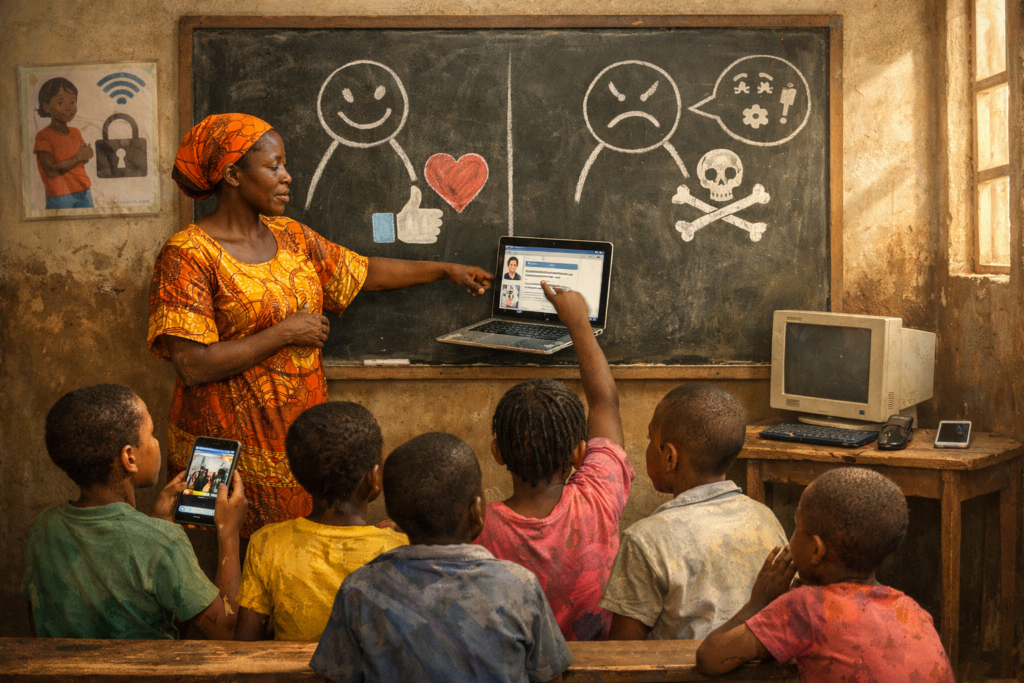
Practical steps also include setting healthy boundaries for screen time, encouraging offline activities that build empathy and social skills, and teaching the importance of privacy and personal safety online. Religious and community leaders can extend their moral teachings to include discussions about digital conduct. Above all, young people should be reminded that the values of honesty, respect, kindness, and responsibility apply just as much online as they do offline. The screen should not be seen as a place where morals are suspended, but as another space where character is revealed.
In the end, moral education in the digital age is about adaptation, not abandonment. Technology is now an integral part of life, and it will continue to shape how future generations think and interact. The challenge is to ensure that this powerful tool becomes a means of building character rather than eroding it. By guiding young people to navigate the digital world with wisdom, empathy, and integrity, society can ensure that moral values remain strong even in a world dominated by screens and algorithms.