

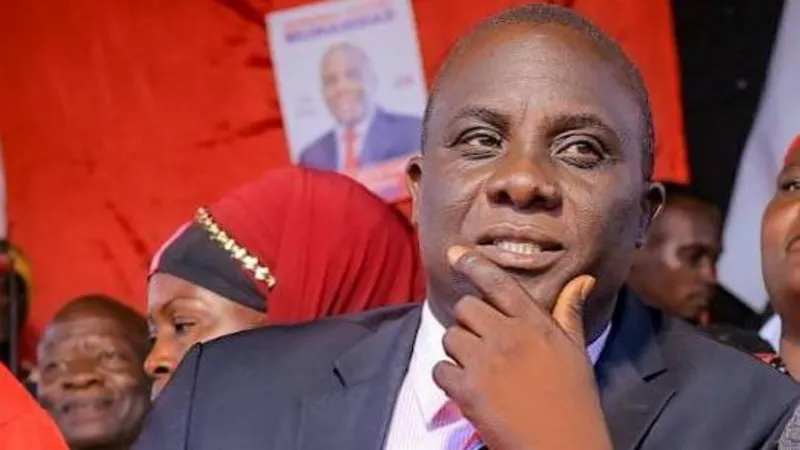

Ugandan authorities have detained Muwanga Kivumbi, a lawmaker and deputy leader of the opposition National Unity Platform (NUP), in connection with alleged election-related violence that followed last week’s parliamentary and presidential elections. Kivumbi, a close ally of opposition leader Bobi Wine, was arrested amid heightened tensions in the wake of the electoral process, which saw President Yoweri Museveni re-elected for a seventh term. According to the Uganda Police Force, Kivumbi’s arrest relates to incidents of political violence, and the lawmaker is expected to be “arraigned before court in due course.” Police described the detention as part of ongoing efforts to maintain law and order following unrest linked to contested election outcomes.
The arrest comes after reports of violent incidents in Butambala district, outside the capital, Kampala, where clashes reportedly took place between opposition supporters and security forces. Kivumbi has been accused by the police of organising attacks on a local police station and a vote-tallying centre in the aftermath of the elections, allegations the NUP denies. While authorities have reported seven fatalities resulting from these confrontations, Kivumbi has claimed that ten people were killed at his home as they awaited parliamentary election results. The divergent accounts of casualties underscore the broader uncertainty and tension surrounding post-election violence in Uganda, where conflicting narratives have emerged from government officials, opposition leaders, and local communities.
President Museveni addressed the recent unrest in his victory speech over the weekend, warning opposition figures, including Kivumbi, against coordinated plans to target polling stations. Museveni claimed that groups of alleged opposition supporters, armed with machetes, had attempted violent attacks in Butambala, leading security forces to open fire, resulting in seven deaths. The president’s statements framed the security response as necessary to quell threats to public safety and maintain electoral integrity, while also signalling a stern warning to opposition politicians challenging his continued rule.
Opposition leader Bobi Wine, who has not returned to public view since fleeing a raid on his residence following the elections, has denounced the results as fraudulent. Wine described the vote as “fake” and alleged a systematic crackdown on political activists and supporters, which he has referred to as a “silent massacre.” In social media posts on Tuesday, he claimed that over 100 people had been killed in post-election violence, though he did not provide independent verification for this figure. Wine’s comments highlight the deep divisions and mistrust between the government and opposition parties regarding both the conduct and outcome of Uganda’s elections.
Complicating the post-election landscape, Uganda’s army chief, Gen Muhoozi Kainerugaba—who is also President Museveni’s son and widely regarded as a potential successor—reported that security forces had killed 22 opposition supporters during poll-related violence. These figures, along with the divergent casualty reports provided by Kivumbi and Bobi Wine, have intensified scrutiny of Uganda’s election processes and the use of force in addressing alleged unrest. Authorities have additionally arrested dozens of youths in Kampala and surrounding districts on various charges connected to election-related incidents, reinforcing perceptions of a broad security crackdown on opposition supporters.
Muwanga Kivumbi’s political prominence within the NUP amplifies the significance of his arrest. As deputy leader of the party, he has been a key figure in mobilising grassroots support for Bobi Wine and has played a prominent role in the party’s legislative and electoral strategy. His detention not only represents a legal challenge for the politician himself but also carries broader implications for the opposition’s ability to organise, campaign, and contest government actions in the coming months. The arrest has drawn attention to ongoing questions about political freedoms and the space for dissent in Uganda’s contemporary political environment.
The current unrest and security operations must also be understood within Uganda’s long-standing political history. President Museveni first came to power as a rebel leader in 1986, and his continued tenure—now approaching 45 years—has been marked by the absence of peaceful presidential transitions since independence. Museveni’s extended rule has faced criticism from domestic and international observers for entrenching executive authority, limiting political competition, and suppressing opposition movements, including the NUP. The tensions following last week’s election, therefore, occur within a broader context of a centralized political system and historically contested electoral processes.
Uganda’s recent elections have repeatedly raised concerns from international organisations and human rights advocates regarding transparency, electoral fairness, and the treatment of opposition actors. Bobi Wine, who has emerged as Museveni’s most prominent challenger in recent cycles, has repeatedly accused the government of electoral manipulation and excessive use of force against supporters. The differing accounts of casualties, arrests, and security operations illustrate the challenge in obtaining an accurate and impartial picture of post-election events, further complicating the potential for dialogue and reconciliation between the ruling party and opposition forces.
The arrest of Kivumbi also highlight the precarious position of political activists and lawmakers in Uganda’s opposition parties. While authorities assert the necessity of maintaining law and order, critics argue that the detention of opposition figures may serve as a deterrent to political mobilisation and free expression.