



US Immigration and Customs Enforcement (ICE) officers detained a five-year-old boy, Liam Conejo Ramos, on Tuesday afternoon in Columbia Heights, Minnesota, after he arrived home from preschool, in an incident that has drawn national attention and raised questions about immigration enforcement practices. According to school officials, federal agents approached a running car in the family’s driveway and took the child from the vehicle as part of an operation to apprehend his father, Adrian Alexander Conejo Arias, who has a pending asylum case in the United States. The episode unfolded in a residential neighborhood and quickly became the subject of public concern and official statements from multiple authorities.
Columbia Heights Public Schools Superintendent Zena Stenvik addressed the incident during a news conference on Wednesday, where she described the officers’ actions as deeply troubling. Stenvik said the child was asked by agents to knock on the door of his home to determine whether others were inside, which she characterized as “essentially using a five-year-old as bait.” She questioned the necessity of detaining a young child, stating, “Why detain a five-year-old? You cannot tell me that this child is going to be classified as a violent criminal.” Stenvik also noted that the family had been living in the United States since 2024 and that the child was a student within the district.
The Department of Homeland Security (DHS) responded to the criticism through spokesperson Tricia McLaughlin, who rejected the assertion that ICE had targeted the child. In a statement, McLaughlin said, “ICE did NOT target a child,” and explained that the agency was conducting an operation to arrest Conejo Arias, who she identified as being from Ecuador. McLaughlin said that for the child’s safety, one officer remained with Liam while others apprehended his father. She added that in such situations, parents are given the option to be removed with their children or to have their children placed with a person of their choosing.
Officials familiar with the family’s case said that Conejo Arias has an active asylum application and had not been ordered to leave the country. This detail has become central to the debate surrounding the incident, as local authorities and advocates argue that the family was still within legal processes to remain in the United States while their claim was being reviewed. The timing of the arrest, and the presence of the child at the scene, have prompted questions about how immigration enforcement operations intersect with families involved in ongoing asylum proceedings.
Marc Prokosch, the family’s lawyer, said on Thursday that both Liam and his father were transported to an immigration detention facility in Dilley, Texas. He said he believed they were being held together in a family holding cell and that his legal team was examining available options to secure their release. “We’re looking at our legal options to see if we can free them either through some legal mechanisms or moral pressure,” Prokosch said during a news conference, emphasizing that the case raised both legal and humanitarian concerns.
Concerns about the conditions at the Dilley facility were raised by Leecia Welch, chief legal counsellor at the advocacy group Children’s Rights, who visited the site last week as part of an ongoing lawsuit concerning the treatment of immigrant children in federal custody. Welch said conditions had worsened significantly, with a sharp increase in the number of detained children. “The conditions were worse than ever,” she said, adding that many children had been held for more than 100 days. She reported that many families described their children as malnourished, frequently ill, and suffering from the effects of prolonged detention.
The case comes amid intensified immigration enforcement activity across Minnesota in recent weeks. Greg Bovino, a US Customs and Border Protection official, said federal agents have arrested approximately 3,000 people in immigration raids across the state during that period. Julia Decker, policy director at the Immigrant Law Center of Minnesota, said advocacy groups have struggled to independently verify the accuracy of the government’s figures and descriptions of those detained, adding to concerns about transparency in enforcement operations.
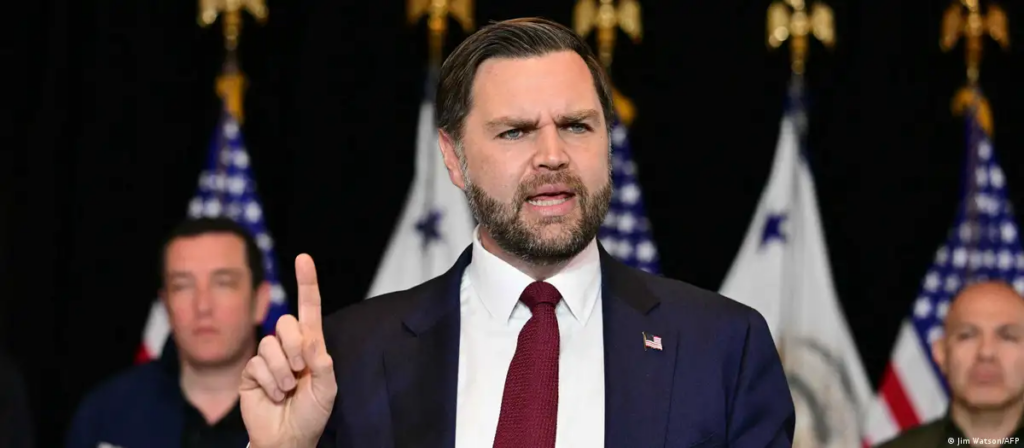
During a visit to Minneapolis on Thursday, US Vice President JD Vance said he had heard the “terrible story” involving Liam but suggested that federal agents may have had limited options during the operation. “Well, what are they supposed to do? Are they supposed to let a five-year-old child freeze to death? Are they not supposed to arrest an illegal alien in the United States of America?” Vance said, noting that he was also the parent of a five-year-old. His remarks reflected the broader debate over how immigration laws are enforced when children and families are involved.
Tensions surrounding ICE operations in Minnesota were also evident in protests linked to the agency’s activities. US Attorney General Pam Bondi said three people were arrested in Minneapolis after demonstrating at Cities Church in St Paul, where protesters alleged that one of the pastors, David Easterwood, was serving as the acting field director for the St Paul ICE field office. Those arrested included civil rights activist Nekima Levy Armstrong and St Paul school board member Chauntyll Louisa Allen, according to local reports. Bondi said in a post on X that Armstrong had played a “key role” in organizing the protest.
Stenvik also disclosed that Liam is the fourth student from Columbia Heights Public Schools to be detained by ICE in recent weeks. She said a 17-year-old student was taken into custody while heading to school on Tuesday, and that a 10-year-old and another 17-year-old had also been detained earlier. The sequence of events has prompted school officials, advocacy groups, and federal authorities to offer differing perspectives on immigration enforcement practices, highlighting the complex intersection of law enforcement, education, and family life as the case of Liam Conejo Ramos continues to unfold.