

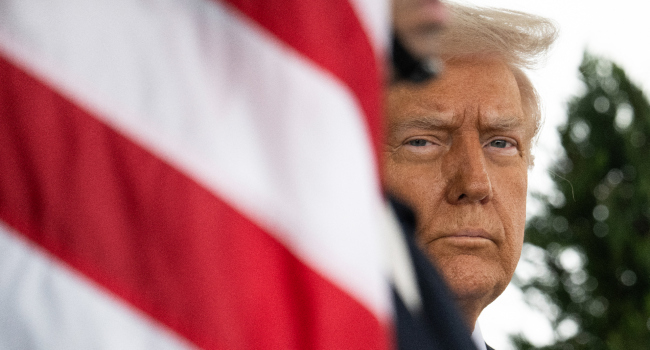

US President Donald Trump’s push for control of Greenland took a notable turn on Wednesday when he publicly ruled out the use of military force, an option he and his administration had previously left open. Speaking at the World Economic Forum in Davos, Switzerland, Trump reiterated his controversial plan to bring the semiautonomous Danish territory under US control, citing its strategic importance to both American and global security. However, he stressed that achieving these ambitions would not involve deploying the military. “We probably won’t get anything unless I decide to use excessive strength and force, where we would be, frankly, unstoppable,” Trump said, before adding, “But I won’t do that.” He later described his comments as “probably the biggest statement I made, because people thought I would use force,” repeating emphatically, “I don’t have to use force. I don’t want to use force. I won’t use force.”
Trump reiterated the position during a bilateral meeting with reporters, insisting, “The military’s not on the table. I don’t think it’ll be necessary,” and expressing confidence that “people are going to use better judgment.” The pledge marked a significant walkback, as the administration’s earlier refusal to rule out force had caused alarm not only in Greenland and Denmark but across the broader Western alliance. Analysts noted that his announcement made the previously unthinkable prospect of the United States invading a NATO ally far less likely, signaling a strategic shift for the White House.
Earlier in January, Deputy Chief of Staff Stephen Miller had told CNN’s Jake Tapper that “nobody is going to fight the United States over the future of Greenland,” while White House Press Secretary Karoline Leavitt stated that “utilizing the U.S. Military is always an option at the commander in chief’s disposal.” When asked last week whether he would rule out military action, Trump had refused to comment, and in a recent letter to Norway’s prime minister, he even hinted that being denied the Nobel Peace Prize made him less likely “to think purely of Peace,” a statement widely interpreted as menacing.
Foreign and domestic pressures appear to have influenced Trump’s shift. On Tuesday, leaders across Europe voiced opposition to his Greenland ambitions. Canadian Prime Minister Mark Carney warned that Trump’s moves were eroding the rules-based international order, saying, “The middle powers must act together, because if we’re not at the table, we’re on the menu.” French President Emmanuel Macron condemned Trump’s use of tariffs as “leverage against territorial sovereignty,” adding, “We do prefer respect to bullies,” while Polish Prime Minister Donald Tusk posted on X that “Europe cannot afford to be weak – neither against its enemies, nor ally. Appeasement means no results, only humiliation.”
Trump’s decision also followed domestic Republican criticisms, with some lawmakers raising the possibility of impeachment should he pursue military action against Greenland. The US financial markets had reacted to these tensions, opening lower on Tuesday amid concerns about a split in the Western alliance over Greenland and the president’s threat of tariffs. Markets recovered following Trump’s Davos speech, suggesting relief that military escalation appeared unlikely.
Despite ruling out force, Trump’s speech in Davos retained a sense of foreboding. He repeatedly referenced US military capabilities and cited the Venezuelan mission against Nicolás Maduro as evidence of American power. “We’re a great power, much greater than people even understand,” he said. “I think they found that out two weeks ago in Venezuela. The attack ended and they said, ‘Let’s make a deal. More people should do that.’” Toward the end of his remarks, he issued a veiled warning to Denmark: “So they have a choice. You can say yes and we will be very appreciative, or you can say no and we will remember.”
Analysts noted that while Trump’s renunciation of military force reduced his leverage, it did not eliminate other tools at his disposal. Tariffs, diplomatic pressure, and threats to NATO commitments remain potential instruments to influence Greenland, Denmark, and European allies. His continued references to military might serve as reminders of what the United States could do, even if he claims not to intend immediate action.
Trump’s strategic walkback reflected a careful balancing act. He sought to maintain the narrative of US strength and indispensability while avoiding a direct confrontation with NATO allies. By ruling out force, he potentially mitigated the immediate risk of conflict but left open economic and political pressure as methods to achieve his objectives.
For Denmark and Greenland, the announcement was a relief. Officials in both territories have consistently emphasized that Greenland’s future should be decided by its residents and the Kingdom of Denmark, not imposed by external powers. Danish leaders welcomed the reduction in immediate military risk but remain wary of ongoing US pressure via tariffs and diplomacy.
The reaction from European capitals was cautiously optimistic. Leaders across the continent have expressed relief that military escalation appears off the table, though they continue to monitor the US approach closely. Officials in Brussels and Paris signaled readiness to coordinate responses to any economic coercion by Washington.
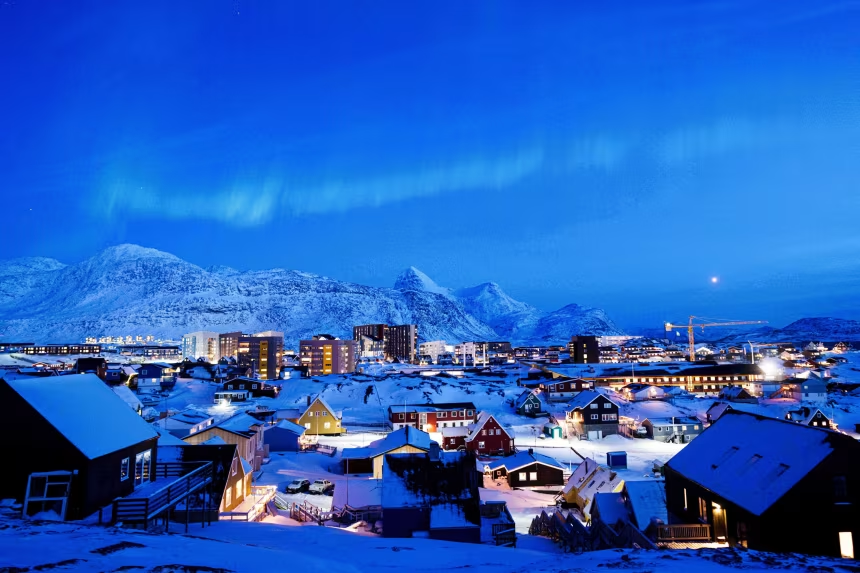
Evgeniy Maloletka/AP
Observers have described Trump’s approach as emblematic of his broader “madman” strategy, in which unpredictability and public displays of strength serve to compel concessions from other actors. The Davos speech demonstrated this pattern, simultaneously projecting power and stepping back from an extreme course of action.
While Trump insisted that the military option was no longer on the table, his repeated references to the potential consequences of resisting US ambitions ensured that Denmark and its allies remain alert. Analysts noted that the veiled threats, combined with tariff risks, continue to make Greenland a point of strategic friction in transatlantic relations.
The episode has highlighted the importance of Arctic security, particularly Greenland’s position between North America, Russia, and China. Trump has consistently framed US control of Greenland as a matter of hemispheric security, arguing that the island’s strategic location makes it critical to missile defense, maritime monitoring, and broader military preparedness.
Public sentiment in Greenland strongly opposes US control, with recent polling showing overwhelming resistance to the notion of American acquisition. Demonstrations in Nuuk and Danish cities have reinforced this opposition, underscoring the democratic principle that Greenlanders’ voices must be central in determining their own future.
Financial markets have responded to the evolving situation, illustrating the economic sensitivity to geopolitical uncertainty. Traders reacted to both the threat of tariffs and the potential fracturing of the Western alliance, with relief seen after Trump’s clarification that military action would not be used.
For the United States, the announcement signals a partial recalibration in its Greenland strategy, reducing the immediate risk of alienating NATO allies. However, Trump retains other tools of influence, including trade and NATO-related leverage, ensuring that Greenland remains a contested point in transatlantic diplomacy.
Trump’s speech also reinforced his broader narrative of US global strength, as he referenced successful military interventions abroad and highlighted America’s capabilities. This combination of assertiveness and restraint is consistent with his approach to projecting power while managing diplomatic fallout.
Trump’s Davos address represents a significant pivot in his Greenland strategy, ruling out the immediate use of force but maintaining other levers of influence. For Denmark, Greenland, and European allies, the announcement provides short-term relief while leaving open the broader strategic and diplomatic contest over the Arctic territory.
US President Donald Trump’s arrival in Davos for the World Economic Forum, following a minor delay due to a technical issue with Air Force One, set the stage for a tense confrontation with world leaders. As he mocked European concerns in preliminary remarks, the unfolding discussion underscored the complex mix of diplomacy, strategy, and domestic politics surrounding Greenland’s future.