

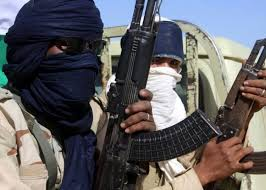

Prominent socio-political organisations across Nigeria have expressed strong outrage over the Katsina State Government’s reported plan to release 70 suspected bandits as part of a peace deal with armed groups, warning that the move poses grave risks to national security and undermines justice and the rule of law. Groups including Afenifere, the Arewa Consultative Forum (ACF), Ohanaeze Ndigbo, the Middle Belt Forum (MBF), and the Coalition of Northern Groups (CNG) described the proposal as reckless and provocative, calling on the Federal Government to immediately intervene and halt what they see as a dangerous precedent in the fight against insecurity.
In separate interviews and statements, the organisations questioned the wisdom and legality of negotiating with armed groups accused of mass killings, kidnappings, and destruction of communities, arguing that such actions reward violence and embolden criminal networks. They warned that releasing suspects without accountability could weaken public confidence in the state, erode the authority of security agencies, and further traumatise communities that have borne the brunt of years of bandit attacks.
The backlash comes amid a worsening security situation in Katsina State, which has suffered persistent banditry linked to killings, abductions, cattle rustling, and village raids. Between 2021 and 2025, more than 1,500 civilians were reportedly killed, while thousands more were displaced from their homes as armed groups targeted rural communities. Kidnappings for ransom have also surged, with farmers, traders, students, and travellers among the victims, deepening fear and economic hardship across the state.
Controversy intensified after reports emerged that the Katsina State Government had approved the release of 70 suspected bandits as part of efforts to revive a faltering peace pact with bandit leaders operating across several local government areas. Critics argue that the move undermines ongoing judicial processes and sends a signal that criminality can be negotiated away, even in the absence of justice for victims.
Efforts by journalists to confirm whether the suspects had already been released yielded no definitive answers, further fuelling public anxiety. A correspondent who visited the office of the Katsina State Commissioner for Justice and Attorney-General to verify the authenticity of documents allegedly authorising the release and to confirm whether the suspects remained in custody was unable to obtain clarification. Officials at the ministry declined to comment, neither confirming nor denying the reports.
This silence from government authorities has heightened speculation in a state already traumatised by years of violence. Residents and civil society groups say the lack of transparency has deepened mistrust, with many fearing that decisions affecting their safety are being taken behind closed doors without adequate consultation or safeguards.
Reacting strongly, Afenifere, the pan-Yoruba socio-political organisation, described the reported plan as an unacceptable appeasement of violent criminals. Its Organising Secretary, Abagun Omololu, said the proposal was reckless, unconstitutional, and a direct threat to national security, warning that state governments lack the constitutional authority to negotiate with terrorists or armed groups without federal oversight.
Omololu cautioned that releasing bandits without full disarmament, accountability, and judicial closure would only embolden criminality and undermine the rule of law. He warned that insecurity in one state could easily spill into neighbouring regions, stressing that bandits freed in Katsina could resurface elsewhere with renewed impunity, turning what is presented as peace-building into what he described as the redistribution of insecurity.
The Arewa Consultative Forum echoed similar concerns, urging caution and restraint. Speaking in Kaduna, ACF National Publicity Secretary, Prof. Tukur Muhammad-Baba, said banditry constitutes heinous crimes with devastating consequences for communities, adding that any decision involving suspected perpetrators must place justice for victims at the centre. He warned that gestures perceived as leniency could be misinterpreted by criminal elements as weakness.
Muhammad-Baba also raised concerns about the broader implications of such a policy, including the risk of a contagion effect, where armed groups in other states might demand similar concessions. He questioned whether the Federal Government had been adequately consulted, noting that security remains a federal responsibility and requires coordinated national action.
Within Katsina State, religious leaders, traditional rulers, youth representatives, and community figures have also voiced strong opposition, reflecting widespread fear and anger at the grassroots. A religious leader in Katsina metropolis, Malam Umar Usman, said it would be difficult for faith leaders to support a move that frees those accused of killing and destroying communities, insisting that such individuals should face the full weight of the law.
Traditional leaders have warned of possible reprisals if the suspects are released. A ward head in the Modoji area, Aminu Jafaru, expressed fears that freed bandits could target security operatives, informants, and traditional authorities who cooperated with law enforcement, saying many residents believe the armed groups would simply resume their activities.
Youth leaders have also threatened legal action. A youth representative in Kankara, who spoke anonymously, said residents felt betrayed by the idea of releasing individuals accused of killing, rape, and extortion, adding that communities would seek redress in court if the plan proceeds. The sense of injustice, he said, risks deepening resentment and mistrust between citizens and the state.
Not all voices within the state were entirely dismissive of dialogue, though even cautious supporters expressed deep reservations. An Islamic cleric who identified himself as Mallam Umar described the plan as risky, noting widespread fear that there is no way to verify whether the suspects have genuinely renounced violence. He acknowledged, however, that some community members are torn between anger and desperation for peace after years of bloodshed.
The Coalition of Northern Groups condemned the planned amnesty in strong terms, describing it as a dangerous capitulation disguised as peace-building. In a statement signed by its National Coordinator, Jamilu Charanchi, the coalition argued that peace built on appeasement and judicial compromise is neither sustainable nor just, particularly when victims’ suffering remains unaddressed.
The CNG rejected comparisons between the release of bandits and wartime prisoner exchanges, insisting that Nigeria is not engaged in a conventional war with a recognised adversary. It warned that treating bandits as negotiating partners without first dismantling their capacity for violence undermines state authority and sends a message that justice is negotiable.
Defending the policy, the Katsina State Commissioner for Internal Security and Home Affairs, Dr Nasir Mu’azu Danmusa, said the planned release was aimed at consolidating community-driven peace efforts across several local government areas. He argued that repentant bandits had released about 1,000 abducted persons through similar negotiations, likening the move to prisoner exchanges that occur during wars.
Danmusa cited examples from multiple local government areas where abducted persons were freed following peace dialogues, insisting that the process was not new and had historical precedents, including during Nigeria’s civil war and negotiations involving Boko Haram. He maintained that the actions of the Ministry of Justice and the courts did not violate existing laws, adding that those dissatisfied were free to seek redress in court.
Similarly, the Commissioner for Information and Culture, Bala Zango, in a personal opinion piece, argued that criticism often comes from those who have not directly experienced the horrors of banditry. He said communities ravaged by killings and kidnappings are more inclined to support unconventional measures if they promise immediate relief and safety, even if such measures are controversial.
Security experts and retired military officers have offered more nuanced assessments, warning that negotiations with armed groups carry serious risks if not conducted from a position of strength. Retired Nigerian Navy officer Commodore Omatseye Nesiama said discussions must begin with recognition of the enormous psychological, emotional, and economic toll banditry has taken on the country.
Nesiama stressed that sustainable negotiations require decisive security actions to weaken armed groups and restore state authority, warning that concessions made while communities remain under attack could be interpreted as weakness. While he acknowledged that limited trade-offs might sometimes be considered to secure the release of captives, he emphasised that such talks must be anchored on the state’s ability to dominate the security landscape.
As the debate intensifies, calls for Federal Government intervention have grown louder. The Middle Belt Forum described the plan as encouraging banditry and urged Abuja to step in, warning that negotiating with criminals instead of prosecuting them sets a dangerous national precedent. Ohanaeze Ndigbo leaders similarly warned of ripple effects across the country, cautioning that released bandits could migrate to other regions and spread violence.