

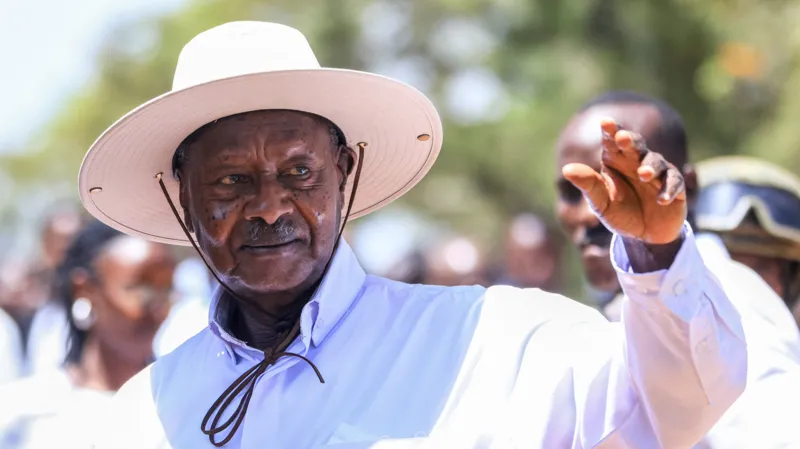

Uganda’s electoral commission has declared President Yoweri Museveni the winner of Thursday’s presidential election, granting him another five-year term in office and extending his rule to more than four decades. According to the official results announced by the commission, Museveni secured 72 per cent of the vote, while his closest challenger, opposition leader Bobi Wine, received 25 per cent. The announcement confirmed Museveni’s continued hold on power in a closely watched election that drew regional and international attention amid concerns over political freedoms and the conduct of the vote.
Museveni, now 81, first came to power in 1986 as a rebel leader after a protracted armed struggle and has since dominated Uganda’s political landscape. Over the years, he has won seven elections, presiding over significant economic and security changes while also facing persistent criticism over authoritarian tendencies, restrictions on opposition activity, and constitutional changes that removed presidential age and term limits. His latest victory cements his status as one of Africa’s longest-serving leaders and underscores the enduring strength of the ruling National Resistance Movement despite growing opposition support, particularly among younger voters.
Bobi Wine, a 43-year-old former pop star turned politician, has rejected the election outcome, describing the results as “fake” and alleging widespread irregularities. In public statements following the announcement, Wine called on Ugandans to engage in non-violent protests to express their opposition to what he described as an unfair and deeply flawed electoral process. His challenge has resonated with supporters who see him as a symbol of generational change, but it has also heightened political tensions in the country in the immediate aftermath of the vote.
The election period was marked by reports of violence and a heavy security presence, particularly in opposition strongholds. Wine has claimed that at least 21 people were killed during election-related incidents, while Ugandan authorities have so far confirmed seven deaths. The discrepancy in figures highlights the difficulty of independently verifying events on the ground, especially as access to information has been severely restricted. Human rights groups have raised concerns about the use of force by security agencies, while the government has maintained that its actions were aimed at preserving public order.
Compounding these concerns is a nationwide internet shutdown that has been in place since Tuesday, limiting access to social media, messaging platforms, and independent news sources. The authorities have said the blackout was necessary to prevent misinformation, electoral fraud, and the incitement of violence. However, the move has drawn criticism from the United Nations human rights office, which described the shutdown as “deeply worrying” and warned that it undermines transparency and the public’s right to information. Bobi Wine has demanded that internet access be restored, arguing that the blackout is being used to suppress dissent and conceal abuses.
Further uncertainty has been created by claims from Bobi Wine’s party that he was forcibly removed from his home and taken by helicopter to an unknown location. Due to the ongoing internet shutdown and restrictions on movement, the allegation has been difficult to verify. Local police have told international media outlets that they were not aware of any such incident. As Uganda awaits the next steps from both the government and the opposition, the disputed election results and competing narratives reflect deep political divisions and set the stage for a tense period in the country’s post-election landscape.