

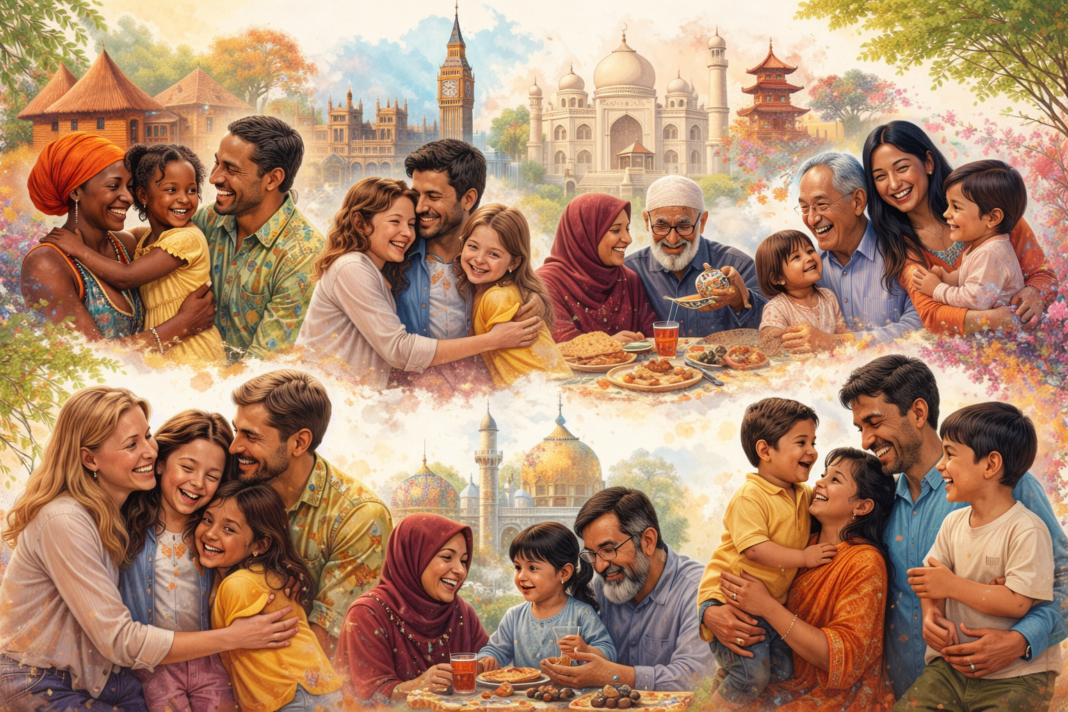

In today’s interconnected world, cultural differences play a powerful role in shaping how families function and how relationships are formed, sustained, and understood. Culture influences our ideas of love, respect, authority, gender roles, and responsibility long before we are aware of it. From how children are raised to how couples express affection or resolve conflict, cultural norms quietly define what is considered “normal.” While globalization and migration have brought people closer than ever, they have also made cultural contrasts within families and relationships more visible, sometimes enriching bonds, and at other times straining them.
One of the greatest strengths of cultural influence on family life is the sense of structure and belonging it provides. In many collectivist cultures, for example, family is viewed as a unit rather than a collection of individuals. Extended families often live close to one another, share resources, and take collective responsibility for child-rearing and elder care. This can foster deep emotional support, strong identity, and a safety net during difficult times. In contrast, more individualistic cultures tend to prioritise independence and personal choice, encouraging children to develop autonomy and self-expression early in life. These differences are not inherently good or bad; rather, they reflect distinct values that shape how people relate to one another.
However, cultural norms can also place intense pressure on individuals, particularly when personal desires conflict with communal expectations. Expectations around marriage, career choices, gender roles, and obedience to elders can become sources of tension within families. In some cultures, individuals may feel obligated to prioritise family approval over personal happiness, leading to silent resentment or emotional distress. In others, the emphasis on independence can result in weakened family bonds or feelings of isolation, especially among older generations who may expect closer involvement from their children.
Cultural differences also strongly affect romantic relationships, especially in multicultural or intercultural unions. Partners may have different views on communication, conflict resolution, finances, or parenting, shaped by the environments in which they were raised. What one partner sees as respect—such as avoiding confrontation—another may interpret as emotional distance. Similarly, direct communication may be valued as honesty in one culture but seen as rude or disrespectful in another. Without awareness, these differences can lead to misunderstandings that feel personal but are, in reality, cultural.
Identity is another complex issue shaped by culture within families and relationships. Children raised in multicultural homes often navigate multiple cultural expectations, sometimes feeling torn between them. While this can create confusion or a sense of not fully belonging anywhere, it can also foster adaptability, open-mindedness, and a richer understanding of the world. When families allow space for hybrid identities rather than enforcing rigid norms, cultural diversity becomes a source of strength rather than conflict.
The key to managing cultural differences in family and relationships lies in empathy and cultural awareness. Empathy allows individuals to see beyond their own experiences and understand why others think or behave the way they do. Cultural awareness helps people recognise that their values are not universal, but shaped by history, tradition, and social context. When families and partners approach differences with curiosity instead of judgment, conversations become more constructive and relationships more resilient.
Ultimately, cultural differences are neither obstacles nor guarantees of harmony; they are realities that require effort, patience, and mutual respect. In a world where cultures increasingly intersect, successful families and relationships are those that balance tradition with flexibility, and identity with understanding. By listening more, assuming less, and embracing diversity, individuals can transform cultural differences from sources of conflict into opportunities for deeper connection and growth.