



In a dramatic turn of events following the recent disturbances in Ekpoma, Esan West Local Government Area of Edo State, Governor Monday Okpebholo has approved the release of individuals arrested in connection with last weekend’s protests. The first group of seven suspects, identified as bona fide students of Ambrose Alli University (AAU), Ekpoma, was freed on Tuesday as part of a wider effort to distinguish between genuine students and those allegedly involved in criminal acts.
The release was overseen by the Edo State Commissioner for Education, Paddy Iyamu, who was on the ground at the Ubiaja Correctional Centre to ensure that verified students were properly identified and discharged. Iyamu emphasised that only those confirmed as legitimate AAU students would be released, underscoring the government’s intent to separate innocent students from individuals accused of fomenting unrest.
The protests, which began on Saturday, January 10, 2026 — initially emerged as a response to growing insecurity in the region, particularly the rising incidence of kidnappings and violent crimes that have troubled residents and students alike. Early reports describe demonstrations involving local youths and some AAU students, with angry residents blocking roads and venting their frustrations.
However, Governor Okpebholo has taken a different stance on the nature of the unrest. During a meeting on Tuesday with Osadebamwen Ehizojie, President of the Students’ Union Government (SUG) of AAU, the governor insisted that the events in Ekpoma were not an organised student protest, but rather a criminal act orchestrated by non‑students.
According to the governor, a group of individuals including some no longer affiliated with the university — used the simmering tensions to incite violence, extort law‑abiding students, and engage in vandalism. He described the episode as part of a broader attempt to exploit insecurity for criminal and possibly political ends.
In his remarks to the SUG leadership, Okpebholo said, “These are people who are no longer students but are just hanging around the school, causing trouble and extorting students… This was not a protest at all; it was an avenue to loot.” He assured that genuine students mistakenly arrested during security operations would be quickly released.
The governor also dismissed widespread social media claims that the incident involved a staged kidnapping, calling such allegations false and deliberately designed to mislead the public and provoke ethnic tensions. “The kidnapping they are talking about is fake. It was stage‑managed,” he said, adding that a separate killing was an unfortunate but unrelated event.
Asked about the broader unrest, Okpebholo warned that anyone, regardless of political affiliation, found sponsoring or using hoodlums to destabilise peace in Edo communities would be held accountable under the law. “I don’t care whether you are a politician or not. If you are using people to destroy our land and economy, we will go after you,” he stated firmly.
Not everyone agrees with the governor’s narrative. Civil rights organisations and student bodies have condemned the response to the protests. The National Association of Nigerian Students (NANS) and groups such as Citizens’ Gavel have demanded the immediate and unconditional release of all detained students, calling their arrest a violation of fundamental rights.
The Human Rights Writers Association of Nigeria (HURIWA) has also criticised the arrests, alleging that many students were taken from their hostels during late‑night raids and charged without sufficient evidence linking them to the actual unrest. The group labelled the operation “gestapo‑style” and argued that the energy expended should instead focus on dismantling criminal networks responsible for actual kidnappings.
Amid the controversy, political voices have weighed in. Former Vice President Atiku Abubakar criticised the handling of the situation, saying the detention of students for protesting insecurity reflects intolerance and heavy‑handedness by authorities, and urging that attention be shifted to combating crime rather than suppressing civic expression.
In contrast, the Pro‑Chancellor of AAU, Chief Dan Osi Orbih, has praised the state government’s actions to release verified students, emphasising that the intervention helped to ease tension among parents and the university community. However, he warned against politicising security challenges.
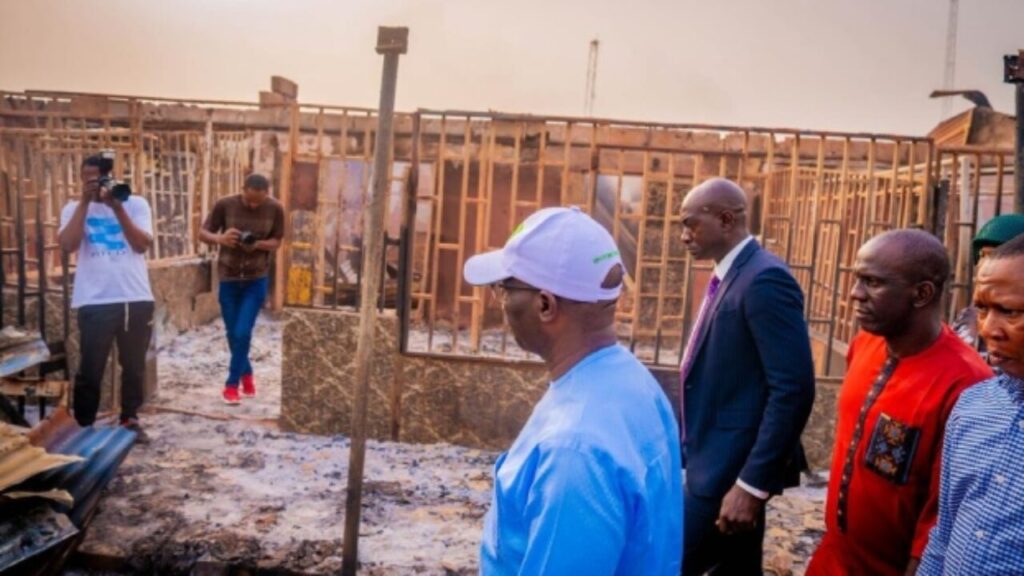
Eyewitness accounts and social media footage from the day of the unrest show a chaotic scene in parts of Ekpoma, where shops were reportedly looted and some property damaged. Security agencies have released some video evidence alleging that those arrested were caught in acts of arson or attempted vandalism.
The Edo State Government has also suggested that elements possibly with foreign backing may have been involved in sponsoring the unrest, including contacts from the Nigerian diaspora, although these claims have not been independently verified.
As the release process continues, authorities and university representatives are urging calm and cooperation, even as civil rights advocates insist that peaceful protest is a constitutional right that should be respected.