

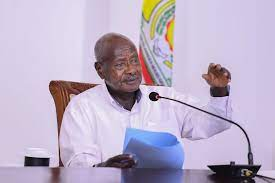

Yoweri Museveni, who has held Uganda’s presidency since 1986, is one of Africa’s longest-serving leaders, a figure whose tenure has been defined by both remarkable stability and persistent controversy. For many Ugandans under the age of 40, Museveni is the only president they have ever known, and his influence on the country’s political, economic, and social landscape is profound. While supporters credit him with ushering in decades of relative peace and development, critics argue that his long rule has eroded democratic institutions and concentrated power within a narrow circle, raising concerns about the future of governance in Uganda.
Born in 1944 in the western region of Ankole, Museveni grew up in a family of cattle keepers during a period of political upheaval as Uganda navigated its independence from the United Kingdom. He came of age under the turbulent leadership of Milton Obote and later Idi Amin, witnessing widespread violence, oppression, and the collapse of institutions that would shape his political consciousness. In his memoirs, Museveni recalls that the chaos of the era left little time for personal details, such as birthdays, as daily survival often outweighed all else.
Museveni pursued higher education at the University of Dar es Salaam in Tanzania, where he studied economics and political science. During his time there, he connected with politically active students from across East Africa, forging networks that would later become critical in his revolutionary activities. His political activism in Tanzania laid the foundation for his eventual return to Uganda to challenge the country’s violent dictatorships.
In the 1970s, Museveni co-founded the Front for National Salvation (FRONASA), a rebel group formed to challenge the regime of Idi Amin, whose rule was marked by extreme brutality, extrajudicial killings, and the expulsion of the Asian community. With support from Tanzania, FRONASA contributed to Amin’s overthrow in 1979, establishing Museveni as a key figure in the new political landscape, although the country quickly descended into further instability.
Following Amin’s removal, Milton Obote regained power through elections that many, including Museveni, deemed rigged. Rejecting the legitimacy of Obote’s leadership, Museveni initiated a guerrilla insurgency in 1981 under the National Resistance Movement (NRM). The movement waged a protracted armed struggle, emphasizing promises of reform, improved governance, and opposition to leaders overstaying their mandates.
By January 1986, after five years of insurgency, Museveni’s NRM successfully captured power, and he assumed the presidency. At the outset of his administration, Museveni pledged to stabilize Uganda, restore economic growth, and strengthen public institutions. International observers initially hailed him as a reformer and a new hope for a country long battered by conflict.
Under Museveni’s leadership, Uganda experienced periods of relative stability and robust economic growth, with the country averaging over 6% annual GDP growth during the first decade of his rule. Primary school enrollment doubled, and major anti-HIV/AIDS initiatives contributed to a reduction in national infection rates. Museveni’s government also positioned Uganda as the largest host of refugees in Africa, welcoming more than 1.7 million displaced people from neighboring countries, a move lauded by humanitarian organizations.
In recent years, Museveni has focused on attracting foreign investment, forging partnerships with nations such as China, the United Kingdom, and the United Arab Emirates. He has articulated a vision for Uganda to become a middle-income country by 2040, presenting himself as a nurturing figure for the nation’s youth, whom he fondly calls Bazukulu, meaning “grandchildren” in Luganda.
Despite these achievements, Museveni’s presidency has been marred by significant criticism and allegations of authoritarianism. His administration has been accused of sidelining opposition figures, including Kizza Besigye and Bobi Wine, through arrests, prosecutions, and other measures that critics say undermine democratic competition. The use of security forces to intimidate or disperse political opponents has been documented by UN reports and local observers.
Media independence has also come under strain, with numerous outlets raided and journalists detained at various points, creating an environment where critical reporting is frequently curtailed. Similarly, Uganda’s judiciary has been accused of being compromised through the recruitment of judges whose loyalty lies with the government, raising concerns about the impartiality of the legal system in politically sensitive cases.
Museveni’s constitutional amendments have drawn further scrutiny. In 2005, presidential term limits were removed, and in 2017, the age limit for presidential candidates was eliminated, enabling him to pursue reelection beyond what was previously constitutionally permissible. Critics argue these changes have entrenched Museveni’s hold on power and weakened institutional checks and balances.
Succession planning has emerged as another contentious issue. Museveni’s wife, Janet Museveni, serves as Uganda’s Minister of Education, while his son, Gen. Muhoozi Kainerugaba, heads the army. His grandson’s recent enrollment in the military has fueled speculation about the potential perpetuation of a family dynasty, raising questions about the future of Uganda’s governance after Museveni.
Security measures remain central to Museveni’s strategy for maintaining political control. Opposition leaders, including Bobi Wine, have faced arrests, detentions, and charges such as treason, although some cases were later dropped. The use of force to disperse peaceful assemblies, reported by the UN, has reinforced perceptions of a government prioritizing control over inclusive political processes.
Critics also point to episodes of electoral irregularities and alleged intimidation of voters and opposition supporters, highlighting the tension between the outward appearance of competitive elections and the underlying concentration of power. International observers and human rights organizations have expressed concern over these practices, urging Uganda to safeguard democratic norms.
Supporters of Museveni, however, argue that his extended rule has provided much-needed stability in a region often plagued by conflict. They credit his administration with economic growth, improved infrastructure, public health initiatives, and a proactive refugee policy. NRM officials emphasize Uganda’s resilience and regional significance, noting the country’s role as a safe haven for displaced populations.
Museveni has cultivated a public persona aimed at projecting vitality and relatability, particularly among young Ugandans. He has been seen engaging in physical exercises and public events, even during the COVID-19 pandemic, reinforcing his image as an energetic leader committed to the youth of the nation.
As Uganda approaches the 2026 elections, Museveni has reiterated his confidence in securing a seventh term. In public addresses, he has called for citizens to vote and described the NRM as “unstoppable,” framing the electoral contest as a continuation of his longstanding project of stability and development.
Observers note that Museveni’s prolonged tenure represents a complex balance between achievements and authoritarian practices. While many citizens appreciate the relative peace and economic gains, concerns about the consolidation of power, weakened institutions, and a potential family dynasty persist.
Internationally, Museveni’s rule is closely watched, with donors and partners assessing both Uganda’s development trajectory and its adherence to democratic standards. Engagements with foreign investors and multilateral institutions underscore the importance of stability, yet the concentration of power continues to attract criticism.
As Museveni continues to campaign and govern, Uganda faces critical choices about governance, succession, and the future of democratic institutions. The 2026 elections will not only test his enduring popularity but also serve as a measure of how Uganda balances stability with political pluralism in a country where one leader has dominated the landscape for nearly four decades.