

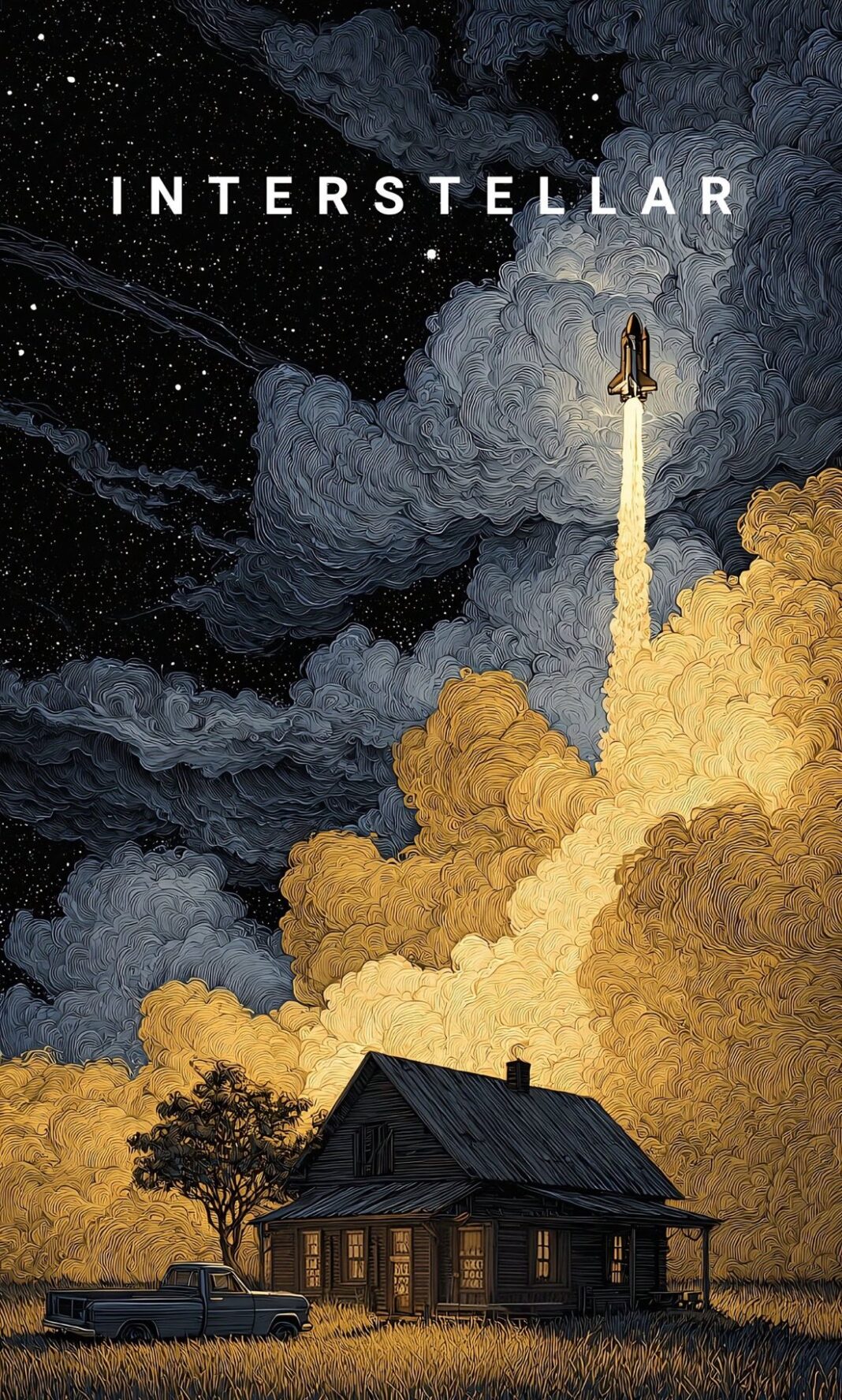

One of the most counterintuitive truths of modern astronomy is that the universe we observe is not the universe as it exists “now,” but as it once was. Every point of light in the night sky—every star, galaxy, and faint glow captured by our telescopes—is a message from the past. Light, though extraordinarily fast, is not instantaneous. It takes time to travel across cosmic distances, and in many cases that time stretches into millions or even billions of years.
When astronomers observe a galaxy ten million light-years away, they are seeing it as it existed ten million years ago. If intelligent life emerged on that galaxy five million years after the light we now observe left its surface, then from Earth’s perspective, that life does not yet exist. In this sense, humanity may be surrounded by living worlds while simultaneously seeing a universe that appears largely silent.
This temporal lag fundamentally reshapes the search for extraterrestrial life. The apparent absence of advanced civilizations may not indicate that life is rare, but that we are observing many worlds during their formative or pre-biological stages. Planets that appear barren through our telescopes today may, in their present moment, host complex ecosystems—or even technological societies—whose signals have not yet reached us.
This idea reframes the famous “Fermi Paradox,” which asks why, given the vastness of the universe, we have not yet encountered evidence of other intelligent life. One possible answer is that the universe is not quiet, but temporally misaligned. Civilizations may exist in abundance, yet separated from us not just by distance, but by time itself.
The implications extend beyond biology to the very nature of observation. Telescopes are time machines, but only in one direction. They allow us to look backward, never forward. Even the most powerful observatories, such as the James Webb Space Telescope, cannot escape this constraint. They sharpen our view of the past, not the present state of distant worlds.
This limitation raises an extraordinary question: could there ever be a way to traverse the universe faster than light, or even faster than time itself, to observe distant regions as they are now?
According to Einstein’s theory of relativity, the speed of light in a vacuum—approximately 299,792 kilometers per second—is the ultimate cosmic speed limit. As an object approaches this speed, its mass increases, requiring infinite energy to accelerate further. This relationship is expressed in the relativistic energy equation:
E = mc² / √(1 − v² / c²)
As velocity (v) approaches the speed of light (c), the denominator approaches zero, and the required energy approaches infinity. In classical physics, this makes faster-than-light travel impossible.
Yet theoretical physics has long explored ways to circumvent this limitation without technically violating it. One such concept is the Alcubierre warp metric, proposed in 1994. Rather than moving an object through space faster than light, the idea involves compressing space in front of a spacecraft and expanding it behind, allowing the craft to ride a wave of spacetime distortion. In theory, this could enable effective faster-than-light travel while the craft itself remains locally stationary.
The obstacle, however, is immense. Such a mechanism would require forms of “exotic matter” with negative energy density—something that has not yet been observed in nature in usable quantities. Moreover, the energy requirements, even in optimistic models, are far beyond current technological capabilities.
Other speculative ideas include traversable wormholes—shortcuts through spacetime connecting distant regions of the universe. While mathematically permissible within general relativity, wormholes suffer from the same practical issue: they appear to require exotic matter to remain stable and open.
More radical still are hypotheses involving higher dimensions. Some theories in string physics suggest that our universe may be embedded in higher-dimensional space, where distances could be shorter than they appear in three dimensions. If such dimensions could be accessed, interstellar travel might become feasible on timescales far shorter than light-speed constraints would suggest.
Yet even these ideas do not truly allow travel “faster than time.” Time itself remains a stubborn boundary. While relativity allows time dilation—where time passes differently for observers moving at high speeds—it does not permit backward travel in a way that would allow us to observe distant planets in their current state.
This leaves humanity in a peculiar position. We may be technologically advanced enough to understand our cosmic limitations, but not advanced enough to overcome them. The universe could be teeming with life, civilizations rising and falling, cultures evolving and vanishing—while Earth perceives only their embryonic pasts.
In this view, the silence of the cosmos is not evidence of emptiness, but of delay. The universe may already be alive, speaking in signals that are still crossing the void.
Whether future technologies will ever allow humanity to bridge that temporal gap remains unknown. What is clear is that our current cosmic perspective is incomplete—not because the universe lacks life, but because we are listening to echoes millions of years old. The true present of the cosmos may be far richer, more complex, and more alive than anything we can currently see.