

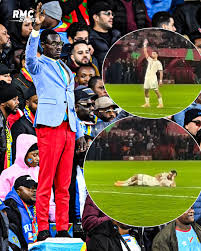

Algeria’s football federation has formally apologised to Congolese superfan Michel Nkuka Mboladinga after an incident at the Africa Cup of Nations (AFCON) in Morocco drew widespread attention and controversy. Mboladinga, a devoted supporter of the Democratic Republic of Congo (DR Congo), had become a viral sensation for dressing as the country’s revered first leader, Patrice Lumumba, and standing stock-still on a makeshift pedestal throughout the Leopards’ matches. Following DR Congo’s defeat to Algeria, however, an Algerian player mimicked Mboladinga in a gesture that sparked outrage among fans and observers.
The incident occurred on Tuesday at Rabat’s Moulay Hassan Stadium, where Algeria defeated DR Congo in a tense AFCON fixture. Mohamed Amine Amoura, the 25-year-old forward who plays for German club Wolfsburg, knelt and fell to the ground as though toppling Mboladinga’s statue-like stance. The gesture quickly circulated on social media, with some Congolese supporters expressing offense at what they saw as a disrespectful act toward both the fan and the national symbol he embodied.
Amoura quickly addressed the incident on Instagram, issuing a personal apology and clarifying his intentions. “At that moment, I wasn’t aware of what the person or symbol in the stands represented. I simply wanted to joke around, in a good-natured way, without any ill intent or desire to provoke anyone,” he wrote. The apology was widely shared and acknowledged by both Congolese and international observers as a sincere attempt to defuse tensions.
Following the backlash, the Algerian Football Federation (Faf) reached out to Mboladinga and took steps to make amends. Saïd Fellak, Faf’s media officer, travelled to Casablanca’s Novotel Hotel to meet Mboladinga and other Congolese supporters on Wednesday evening, presenting the superfan with his own Desert Foxes jersey featuring “Lumumba” printed on the back. Congolese Sports Minister Didier Budimbu was also present during the gesture, highlighting the diplomatic and cultural significance of the encounter.
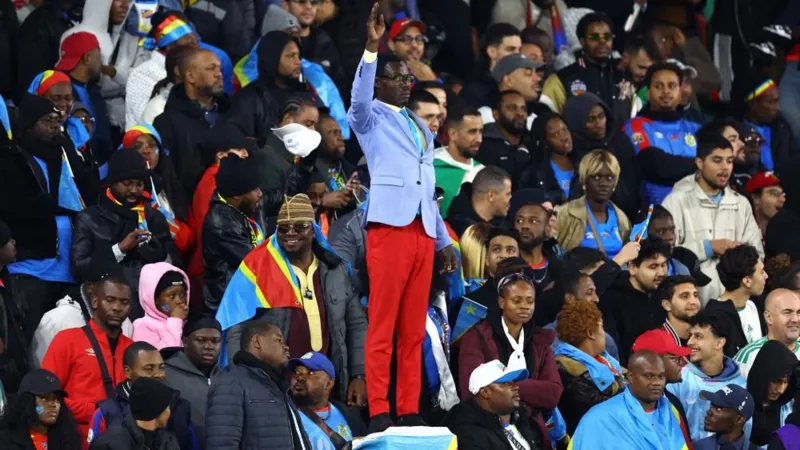
Mboladinga, who resembles Lumumba with his hairstyle and glasses, was visibly emotional following DR Congo’s defeat. Videos from the stadium show him removing his glasses to wipe away tears, slowly stepping down from his makeshift pedestal, and leaning against it with his head in his hands. For many Congolese fans, Mboladinga’s act was more than mere fandom; it was a tribute to a national hero whose image continues to inspire pride and unity across the country.
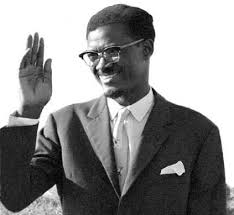
Patrice Lumumba, whom Mboladinga emulated, was the first Prime Minister of the Democratic Republic of Congo following its independence from Belgium in 1960. A prominent figure in Africa’s anti-colonial movement, Lumumba advocated for the political and economic sovereignty of his nation and challenged the lingering influence of European powers. His tenure as prime minister was brief but historically significant, marked by efforts to unify the newly independent state amidst internal and international pressures.
Lumumba’s assassination in January 1961 remains a defining moment in Congolese and African history. He was killed in a plot involving both domestic rivals and foreign powers, including Belgium, the United Kingdom, and the United States. His death turned him into a martyr for African liberation and anti-imperialism, and his image, immortalized in statues such as the one in Kinshasa, symbolizes the ongoing struggle for dignity, self-determination, and justice.
Mboladinga’s choice to embody Lumumba during AFCON matches resonated with many fans, who saw in his still, upright stance a living homage to the leader’s courage and dignity. By standing motionless with his right arm raised, mimicking the famous statue in Kinshasa, Mboladinga became a bridge between sport, history, and national identity, drawing attention from media across Africa and beyond.
The match itself was closely contested, with Algeria initially appearing to head toward penalties before Adil Boulbina scored in the 119th minute to secure Algeria’s place in the AFCON quarter-finals. The victory sets Algeria up for a high-profile clash against Nigeria on Saturday, while DR Congo’s elimination was a blow to Leopards supporters hoping to see their team advance further in the tournament.
Beyond the pitch, the incident sparked a wider conversation about respect, cultural symbols, and the intersection of sports and history. Fans and commentators noted that football stadiums often serve as sites for expressing national pride and memory, and actions that appear humorous to some may carry deep historical or emotional weight for others. Amoura’s apology and Faf’s proactive engagement were widely praised as steps toward acknowledging and respecting these cultural sensitivities.
The encounter between Faf representatives and Mboladinga in Casablanca was captured in photos and videos that circulated online, showing the superfan beside Fellak wearing his new jersey. The gesture was seen as a symbolic reconciliation, with Congolese fans applauding both the Algerian federation’s initiative and Amoura’s contrition. Sports analysts highlighted how the incident underscored the importance of cross-cultural awareness during international tournaments like AFCON.
Looking ahead, DR Congo is preparing for the upcoming intercontinental World Cup qualifiers in Mexico, where the Leopards are expected to compete in March. While Mboladinga’s pedestal may not travel with the team, his tribute to Lumumba has already become one of the most memorable cultural moments of AFCON 2026, emphasizing how fan dedication can highlight national history on the international stage.
Algerian player Amoura expressed hope that he would have the chance to see DR Congo compete in Mexico, reiterating his respect for the team and its supporters. “I respect Congo and their team. Honestly, I wish them the best and hope they qualify for the World Cup,” he said, signaling a commitment to sportsmanship despite the earlier controversy.
The incident has also prompted broader reflection among the football community about the responsibilities of players and fans in maintaining respect for historical symbols and national icons. Many commentators noted that while the stadium is a space for celebration and rivalry, gestures that touch on political or historical legacies must be approached with care, highlighting the ways in which football intersects with culture and memory.
Ultimately, the episode illustrates the power of sport to bring history and contemporary culture into dialogue. Mboladinga’s dedication to Lumumba, Amoura’s apology, and the Algerian federation’s conciliatory response demonstrate how moments of tension can become opportunities for understanding and cross-cultural respect, reinforcing the idea that football is not only about goals and victories but also about shared human stories and heritage.