

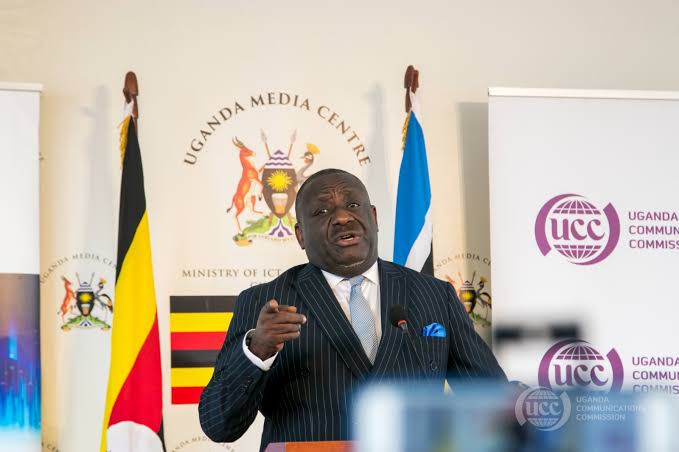

In a controversial move that has reverberated across African digital circles and global tech commentary, the Government of Uganda announced a ban on Bitchat, a widely used social-media and chat application, citing concerns over national security, misinformation, and alleged threats to public order. The announcement comes at a politically sensitive moment as Uganda approaches its general elections in 2026. Adding new complexity to debates around digital rights, political messaging, and civic participation.
According to the Uganda Communications Commission (UCC), the government’s regulator, Bitchat’s “unregulated content streams and encrypted messaging” have been exploited to spread disinformation, hate speech and destabilising narratives that risk undermining national cohesion. Authorities say the ban is intended to safeguard public order and curb the misuse of digital platforms for malicious purposes. While details of the legal basis for the ban remain evolving, the UCC cited provisions of the Electronic Communications Act that empower regulators to restrict services deemed harmful to national security.
The ban has sparked intense debate within Uganda’s civic space. Protesters and digital-rights advocates have characterised the action as an infringement on free expression and access to information. Critics argue that, just weeks before a national election, shuttering a major platform could stifle political debate, restrict grassroots mobilisation, and skew the digital public sphere toward government-aligned narratives. Civil liberties organisations both inside and outside Uganda have condemned the move as disproportionate and lacking sufficient transparency or due process.
On global social networks, the decision drew high-profile reactions. Jack Dorsey, co-founder of Twitter and a prominent global technologist, weighed in from his X account. Dorsey described the ban as “a deeply troubling restriction of online speech” and called for greater clarity from Kampala on what specific harms were alleged and how citizens could seek redress. Other commentators echoed concerns about precedent, warning that restricting access to mainstream digital platforms ahead of elections risks entrenching information asymmetries and limiting public scrutiny of political actors.
Supporters of the ban, including some Ugandan legislators and civil-society groups aligned with the government, maintained that sovereignty and social stability justify tough regulatory action. They emphasise that Uganda ( like many other countries ) must grapple with the dark side of digital connectivity: targeted misinformation campaigns, foreign influence operations, and real-time coordination of violent outbreaks. In this view, the temporary restriction on Bitchat is a defensive measure aimed at protecting voters and safeguarding democratic order, rather than suppressing legitimate dissent.
How the ban affects the political landscape is already clear in campaign discourse. Opposition parties and activists have decried the timing of the ban, interpreting it as an attempt to weaken their ability to organise and communicate with supporters. Uganda’s major opposition figures, including the presidential candidate of a coalition formed earlier this year, have highlighted the ban in rallies and press appearances – arguing that digital exclusion undermines democratic fairness. Meanwhile, the ruling party has insisted that responsible regulation is necessary to ensure peace and security throughout the electoral period.
Analysts point out that information ecosystems during elections are inherently sensitive. In democracies worldwide, the spread of misinformation ( especially via encrypted or hard-to-moderate platforms ) has been linked to polarization and violence. In Uganda’s 2026 context, where tribal affiliations, economic grievances and political rivalries already shape public sentiment, authorities argue that preemptive measures are warranted. Nevertheless, critics counter that election security and free expression should not be mutually exclusive and call for inclusive, transparent mechanisms to balance these values.
The ban also raises commercial and technological questions. Bitchat has been popular in Uganda partly because it requires minimal data and operates on basic connectivity — a vital feature in a country where internet access costs remain high for many users. Removing access affects not only political communication but also business interactions, community coordination, and everyday social engagement. Tech entrepreneurs and app developers in East Africa have expressed concern that the ban could deter investment and innovation in digital platforms perceived as politically vulnerable.
International organisations, including human-rights groups and free-speech advocates, have urged multilateral engagement. They recommend that Kampala establish clear appeal processes for banned services, publish risk assessments justifying each restriction, and work with independent Internet governance bodies to ensure due process. Some foreign governments have also signalled interest in the situation, with statements emphasising the importance of protecting democratic processes and the free flow of information — while acknowledging each country’s right to defend national security.
Ultimately, the Bitchat ban in Uganda exemplifies broader global tensions between digital sovereignty and digital freedom. As technology continues to outpace policy frameworks, governments are grappling with how to regulate platforms without inadvertently suppressing civil liberties. In Uganda’s case, the upcoming 2026 election amplifies these debates. Whether the ban will dampen civic participation, alter political messaging or provoke legal challenges remains to be seen — but its immediate impact on Uganda’s digital ecology and political discourse is already significant.