

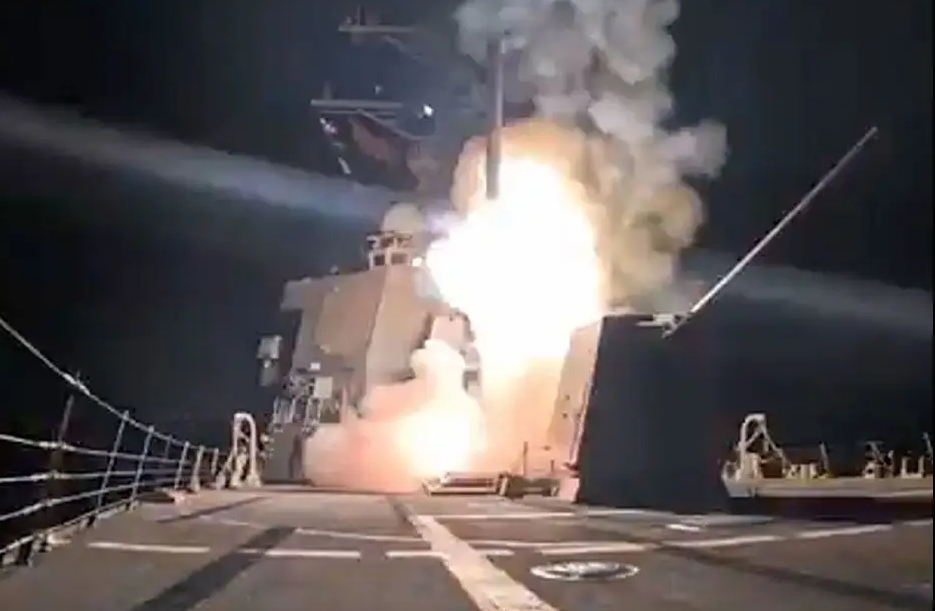

Nigeria has emerged as a key testing ground in a rapidly changing global order where powerful states increasingly use unilateral military action to pursue national interests, according to a new report by SBM Intelligence titled Brave New World: Venezuela, Nigeria and the Implications of American Unilateralism on International Law, the Global Economy, and Investment in a New Strategic Age.
The report argues that the United States’ Christmas Day 2025 military strikes in Nigeria were not a one-off counter-terrorism operation but part of a broader shift in US foreign policy, later reinforced by the January 2026 intervention in Venezuela.
“The U.S military intervention in Venezuela on 3 January 2026, resulting in the capture of President Nicolás Maduro, stands not as an isolated event but as the definitive enactment of a revolutionary US foreign policy doctrine,” the report states, adding that these actions signal a move away from post-Cold War multilateralism towards unilateral enforcement.
SBM Intelligence says Nigeria’s case is especially significant because it shows how Global South countries may become more exposed to external military action justified through changing security and humanitarian narratives.
The report highlights differing accounts of the Sokoto strikes, noting that “the Americans framed that operation as a protection of religious minorities, while Nigeria simultaneously framed it as a routine counter-terrorism collaboration,” a divergence it says weakens shared understandings of sovereignty and international law.
The report also warns of serious economic consequences, particularly for energy-producing countries like Nigeria.
“The targeting of two major energy-exporting countries, Venezuela by invasion and Nigeria by precision strike, fundamentally reprices political risk in global commodity markets,” it states, arguing that future investment will increasingly depend on geopolitical alignment rather than economic fundamentals, deepening instability and uncertainty for vulnerable economies.