

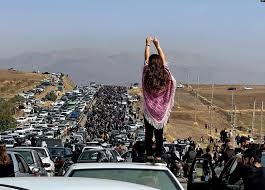

Iran is experiencing one of its largest waves of public protests in years, with demonstrations erupting across major cities and provinces in late December 2025 and continuing into early January 2026. Initially triggered by economic distress, the unrest has evolved into broader expressions of frustration over governance, living standards, and political accountability.
The protests began in Tehran’s Grand Bazaar and central commercial districts on 29 December 2025, after Iran’s national currency, the rial, plunged to historic lows against the U.S. dollar — more than 1.38 million to the dollar on open markets. This depreciation has been accompanied by inflation that has surged above 40 percent, drastically reducing people’s purchasing power and driving up the cost of basic goods.
In response, shopkeepers, traders and small business owners staged strikes and demonstrations, shuttering their businesses and taking to the streets to voice economic grievances. From Tehran, protests quickly spread to other cities including Isfahan, Shiraz, Mashhad, Karaj, Qom, Lorestan, Hamedan and several rural towns — with gatherings reported in more than 30 provinces. Many participants chanted slogans not only about living conditions but also against the political leadership, raising broader criticisms of corruption and government mismanagement.
The movement soon drew in other sectors of society. Students at universities held campus demonstrations, and reports indicate that some truck drivers and labor groups expressed support, complicating Tehran’s efforts to contain dissent. Social media footage verified by independent sources showed crowds chanting phrases such as “Azadi” (the Persian word for “freedom”), reflecting demands that extend beyond immediate economic concerns.
Iran’s authorities have responded with a strong security presence. Riot police and paramilitary units — including the Basij, a volunteer militia linked to the Islamic Revolutionary Guard Corps — were deployed in multiple cities. Reports from rights groups and journalists indicate that security forces have used tear gas, water cannons and, in some instances, live ammunition and pellet guns to suppress demonstrations. Reuters has documented clashes that left both civilians and at least one Basij member dead during confrontations.
The protests have also had political consequences within Iran’s leadership. On 30 December, the government announced the resignation of the Central Bank governor, Mohammad Reza Farzin, shortly after the rial’s dramatic collapse. President Masoud Pezeshkian later appointed a successor with a mandate to stabilise the currency and address financial mismanagement, although critics note that mere personnel changes may do little to resolve deeper structural problems.
Despite the crackdown, the demonstrations have shown a level of resilience. Independent observers and human rights organisations have tracked hundreds of arrests and ongoing confrontations in city squares and bazaars. According to a situation report by the HANA Human Rights Organization, authorities have detained large numbers of protest participants, and confrontations between demonstrators and security forces have occasionally escalated into serious clashes.
International reactions have been mixed. Some governments have condemned the use of force against civilian protesters and urged dialogue, while others caution against external interference — particularly after public statements by foreign leaders like President Donald Trump that were interpreted by Tehran as threats of intervention. Iran’s government has labelled such external commentary as crossing a “national security red line,” asserting that it will defend its sovereignty against outside involvement.
Analysts note that while the protests were initially economic in nature, they have increasingly taken on political overtones, with some demonstrators openly criticising clerical authority and questioning the direction of the country’s leadership. This reflects a broader frustration that has built up over years of economic pressure, currency volatility and restrictions on political freedoms.
The situation remains fluid. Authorities have offered limited dialogue with trade representatives and academic groups, but many protesters remain sceptical, insisting their demands go beyond short-term measures to encompass systemic change. Iran’s economic challenges — amplified by international sanctions and regional geopolitical pressures — continue to shape the domestic landscape as leaders and citizens navigate a period of significant unrest.