

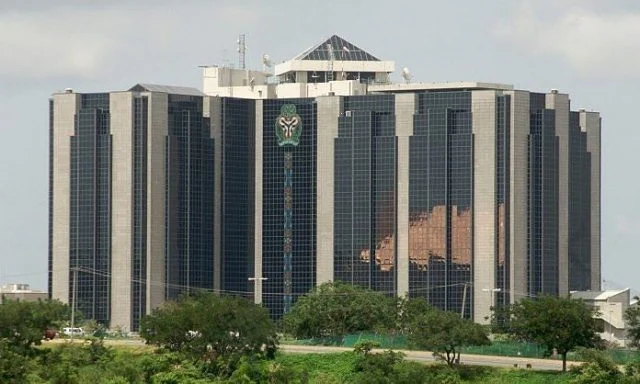

Nigeria’s banking sector recorded a notable rise in non-performing loans in 2025 after the Central Bank of Nigeria withdrew the regulatory forbearance measures that had shielded lenders during the COVID-19 pandemic, according to the apex bank’s latest macroeconomic outlook report, a development that has refocused attention on asset quality, credit risk, and the true health of bank balance sheets after years of extraordinary regulatory support.
The CBN report showed that the industry’s non-performing loan ratio climbed to an estimated 7.0 per cent in 2025, breaching the prudential benchmark of 5.0 per cent, a threshold widely regarded by regulators as the line beyond which credit deterioration can begin to pose broader financial stability risks, particularly in an economy still grappling with inflationary pressures and weak purchasing power.
According to the central bank, the increase did not emerge suddenly but reflected the delayed impact of the withdrawal of temporary reliefs granted to banks during the pandemic, when regulators allowed lenders to restructure loans affected by COVID-related disruptions without immediately classifying them as non-performing, thereby preventing an abrupt spike in bad loans at a time of global economic stress.
During the pandemic years, regulatory forbearance was deployed as a stabilisation tool, enabling banks to grant moratoria, restructure facilities, and provide breathing space to borrowers in sectors hit by lockdowns, supply chain disruptions, and collapsing revenues, a move that helped preserve confidence in the financial system and prevented a credit crunch when economic activity slowed sharply.
With the gradual withdrawal of these measures in 2025, however, many of the restructured facilities that had remained technically “performing” under forbearance rules were reclassified based on stricter prudential standards, leading to the crystallisation of bad loans and pushing the industry-wide NPL ratio above the regulatory ceiling for the first time in years.
“The Non-performing Loans ratio stood at an estimated 7.00 per cent relative to the prudential limit of 5.00 per cent,” the CBN said in the report, adding that “the level of NPLs reflected the withdrawal of the regulatory forbearance granted to banks during the COVID-19 pandemic,” a statement that underscores how much of the deterioration was already embedded in loan books before the reliefs were lifted.
Despite the uptick in bad loans, the central bank maintained that Nigeria’s financial system remained broadly stable in 2025, pointing to strong liquidity and capital buffers across the banking sector that have so far cushioned the impact of weaker asset quality and allowed lenders to absorb losses without triggering systemic stress.
Data in the report showed that the industry’s liquidity ratio averaged about 65 per cent in 2025, well above the regulatory minimum of 30 per cent, while the capital adequacy ratio stood at 11.6 per cent, exceeding the 10 per cent threshold, figures the CBN said demonstrated the sector’s ability to withstand shocks and continue supporting economic activity.
The apex bank attributed this resilience to several factors, including strong interest income in a high-rate environment, ongoing digital transformation that has helped banks improve efficiency and reduce costs, and the recapitalisation programme that is reshaping balance sheets by significantly raising minimum capital requirements for Nigerian lenders.
The recapitalisation exercise, which is expected to run through the medium term, is designed to strengthen banks’ capacity to support the real economy through larger-ticket lending, finance infrastructure and industrial projects, and compete more effectively in a global financial system that increasingly rewards scale and strong capital positions.
However, the CBN cautioned that the rise in non-performing loans highlights emerging vulnerabilities, particularly as higher interest rates, elevated inflation, and sluggish growth in some sectors weigh on borrowers’ repayment capacity, raising the risk that asset quality could deteriorate further if macroeconomic conditions fail to improve.
The central bank warned that a “significant rise in non-performing loans could impair asset quality and weaken banks’ balance sheets, thereby posing systemic risk,” stressing the importance of sustained prudential discipline, close monitoring of credit risk, and proactive supervisory engagement to prevent localized stress from escalating into a broader financial crisis.
As part of its regulatory response, the CBN in June 2025 issued a circular signed by its Director of Banking Supervision, Olubukola Akinwunmi, directing banks still operating under approved regulatory forbearance to suspend dividend payments to shareholders, defer executive bonuses, and halt investments in foreign subsidiaries or new offshore ventures.
“In view of the need to strengthen capital buffers, enhance balance resilience and promote prudent internal capital retention during this transitional period, the CBN hereby directs that all banks currently benefiting from credit or SOL forbearance shall suspend the payment of dividends to shareholders, defer the payment of bonuses to directors and senior management staff, and refrain from making investments in foreign subsidiaries or new offshore ventures,” the circular stated.
The CBN explained that the measures were temporary and would remain in place until banks fully exited regulatory forbearance and their capital adequacy and provisioning levels were independently verified to be compliant with prevailing standards, a move aimed at ensuring that profits are retained to absorb potential losses rather than distributed.
Market analysts broadly welcomed the stance, with Renaissance Capital expressing support for the central bank’s decision, noting that stricter capital retention would help mitigate risks arising from lingering forbearance exposures that still account for a significant share of some banks’ loan books.
According to Renaissance Capital’s estimates, Zenith Bank, First Bank, and Access Bank have forbearance exposures equivalent to about 23 per cent, 14 per cent, and 4 per cent of their gross loan books respectively, while Fidelity Bank and FCMB, classified as top-tier-II lenders, have exposures of roughly 10 per cent and 8 per cent.
In contrast, the firm said Stanbic IBTC and GTCO have zero per cent forbearance exposure in their gross loans based on its estimates, with GTCO having adequately provisioned for and written off its forbearance exposures earlier, underscoring the divergence in balance sheet risk profiles across the sector.
In absolute terms, Renaissance Capital estimated regulatory forbearance exposures at approximately $304 million for AccessCorp, $887 million for FirstHoldCo, $134 million for FCMB Group, $296 million for Fidelity Bank, $282 million for United Bank for Africa, and as much as $1.6 billion for Zenith Bank, figures that highlight the scale of potential pressure points if asset quality deteriorates further.
With these exposures, analysts warned that some lenders could face challenges around capital adequacy and compliance with Single Obligor Limits, particularly if additional loans slip into non-performing status, making the CBN’s push for recapitalisation, stronger provisioning, and tighter supervision even more critical.
Looking ahead to 2026, the central bank said the outlook for the banking sector remains broadly positive but stressed that lenders must continue to strengthen risk management practices, diversify loan portfolios, and deepen the operational integration of the Global Standing Instruction framework to improve loan recovery efficiency and credit discipline.
The CBN added that ongoing recapitalisation, alongside reforms in the foreign exchange market, tax administration, and broader macroeconomic management, forms part of a coordinated strategy to consolidate financial stability, boost investor confidence, and ensure that Nigeria’s banking system is better positioned to support sustainable economic growth while withstanding future shocks.