

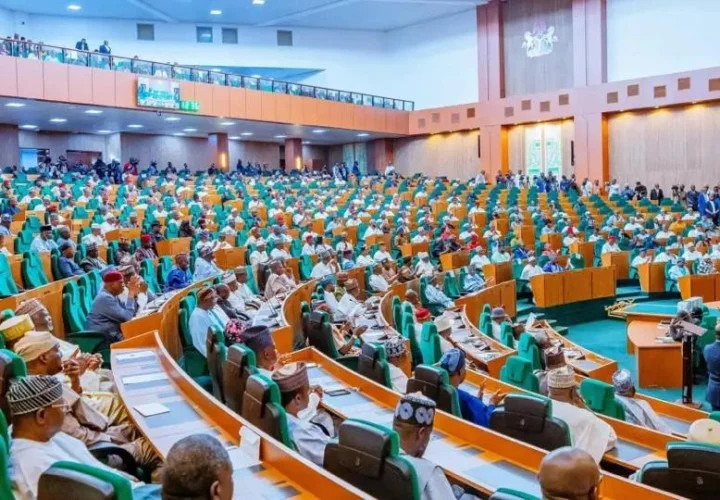

Opposition to the implementation of Nigeria’s newly enacted tax laws intensified on Monday, with the Minority Caucus of the House of Representatives and the National Association of Nigerian Students (NANS) calling for an immediate suspension of the legislation. Meanwhile, the Federal Capital Territory (FCT) High Court ordered accelerated hearing of a suit challenging the authenticity and proposed commencement of the laws on January 1, 2026.
The controversy arose after allegations that the versions of the tax laws gazetted by the Federal Government materially differ from those passed by the National Assembly and signed by President Bola Tinubu, prompting concerns over potential violations of the 1999 Constitution (as amended).
Two weeks ago, Abdussamad Dasuki, a Peoples Democratic Party lawmaker representing Kebbe/Tambuwal Federal Constituency, raised the alarm on the floor of the House. He stated: “The tax Acts passed by this House are not the same as the copies gazetted by the Federal Government. These alleged alterations were made without our approval, and if left unchecked, constitute a violation of our constitution.”
In response, the House constituted a seven-man ad hoc committee chaired by Muktar Betara, representing Borno State, to investigate the alleged discrepancies and report back for further legislative action.
On Monday, the Minority Caucus issued a joint statement, signed by Minority Leader Kingsley Chinda, Minority Whip Ali Isa, Deputy Minority Leader Aliyu Madaki, and Deputy Minority Whip George Ozodinobi. The statement said: “We have noted with great consternation and an overwhelming sense of disappointment the current storm brewing over the tax reform laws that were duly passed by the National Assembly and properly signed into law by President Bola Ahmed Tinubu, GCFR.”
The caucus emphasised the seriousness of the issue, adding: “Ordinarily, the controversy would have been dismissed as needless, but the gravity of the cause of the controversy is an issue of great concern to all Nigerians, especially since it borders on accusations of unlawful alterations to the laws as passed by both chambers of the National Assembly and subsequently signed by the President.”
Chinda further stated: “We want to assure Nigerians that the Minority Caucus of the House of Representatives will stand with the entire House to see that the circumstances surrounding this illegality are exposed and the culprits brought to book in the interest of justice for all Nigerians.”
The caucus warned the public: “We call on Nigerians to disregard any purported tax laws being circulated without the signature of the Clerk of the National Assembly and the President and Commander-in-Chief, as such did not originate from the National Assembly and neither reflect what was actually passed by the Legislature.”
It also urged the Federal Government to suspend enforcement of the tax laws pending the outcome of the investigation: “We call on government to suspend the implementation of the tax laws until investigations are concluded and there is clarity and certainty of the law to be implemented. Nigerians and the business community are entitled to copies of the laws they are expected to comply with.”
In parallel, NANS voiced strong opposition, threatening coordinated nationwide protests. National President Olushola Oladoja said: “A law whose authenticity is now under investigation cannot, in good conscience, be implemented. With the National Assembly already setting up a committee to review and investigate the alleged alterations, the implementation of this law by January 1 becomes clearly untenable, reckless, and unacceptable.”
Oladoja warned: “Failure to suspend the law by January 14, 2026, will trigger nationwide protests. Nigerians deserve transparency, public education, and proper communication on the content and implications of these reforms.”
The student body also criticised the Federal Inland Revenue Service (FIRS) for its public sensitisation approach: “It is a shame that the FIRS has failed woefully in its responsibility to design and execute an effective, inclusive, and nationwide public enlightenment process. Using selected social media influencers is elitist, exclusionary, and disconnected from the realities of the average Nigerian household,” Oladoja said.
Despite the mounting opposition, the Federal Government reaffirmed its commitment to the January 1 rollout. Taiwo Oyedele, Chairman of the Presidential Committee on Fiscal Policy and Tax Reforms, said: “Implementation of the Nigeria Tax Act and the Nigeria Tax Administration Act remains firmly on schedule. All legal and administrative procedures have been duly followed.”
The legal dimension intensified on Monday when the FCT High Court, Abuja, granted accelerated hearing in a suit seeking to halt the implementation of the 2025 Tax Acts. The suit, filed by the Incorporated Trustees of African Initiative for Abuse Public Trustees, challenges the alleged discrepancies and the proposed January 1 start date.
Plaintiff counsel Nnamdi Mba told the court: “Our clients seek clarity and legality in the rollout of these far-reaching tax laws. Any attempt to enforce altered laws could have severe consequences for Nigerians and the business community.”
The court joined as respondents the Attorney-General of the Federation, the Senate President, the Speaker of the House of Representatives, and the National Assembly. Justice Bello Kawu granted leave for substituted service and ordered that all defendants be put on notice.
However, the judge declined to restrain the Federal Government or its agencies from proceeding with the implementation of the laws, adjourning the substantive hearing to Wednesday, December 31, 2025.
Political analysts have observed that this controversy highlights growing tensions between the legislature and the executive, and underscores the importance of public trust, transparency, and accountability in Nigeria’s governance.
Observers also noted that student activism has amplified the debate, bringing the concerns of ordinary citizens into the national spotlight and increasing pressure on the government to clarify the laws.
The Minority Caucus reiterated the importance of following proper legislative procedures, warning: “We stand ready to ensure accountability and uphold the independence of the National Assembly. Altered laws cannot and should not be enforced without proper authentication.”
Civil society commentators highlighted that the ongoing judicial review, combined with legislative and student scrutiny, may set important precedents for constitutional governance and fiscal oversight in Nigeria.
As the new year approaches, Nigeria faces growing uncertainty over one of its most comprehensive tax reforms in decades. The outcomes of the legislative scrutiny, student activism, and judicial review are expected to determine the final fate of the tax laws and the manner in which they are implemented.