

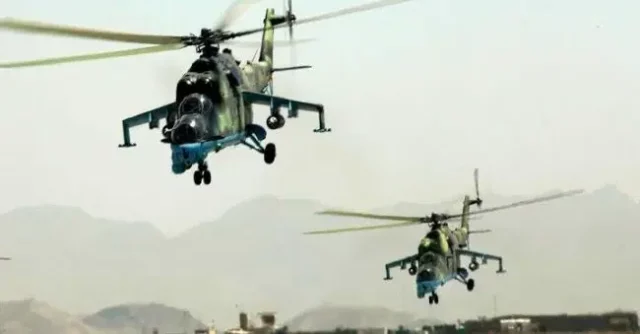

The Nigerian Air Force (NAF) on Monday confirmed that it executed two precision air strikes against bandit hideouts in Tsafe Local Government Area of Zamfara State, significantly degrading the operational capacity of the armed groups. The strikes, conducted under the Air Component of Operation FANSAN YAMMA, Sector 2, targeted Turba Hill and a camp linked to notorious bandit kingpin Kachalla Dogo Sule, destroying operational structures and neutralising several bandits, according to Air Commodore Ehimen Ejodame, NAF Director of Public Relations and Information.
Ejodame explained that the operations followed credible, multi-source intelligence, surveillance, and reconnaissance that revealed human activity and operational structures central to the bandits’ activities. “Acting on credible, multi-source intelligence, NAF air assets were deployed against bandit enclaves at the identified locations. The first strike targeted Turba Hill, a confirmed bandit hideout. Persistent intelligence revealed significant human activity and an operational zinc-roofed structure assessed to be central to the enclave’s activities,” he said.
He added that the second strike successfully engaged the camp linked to Kachalla Dogo Sule, a key operator in the manufacture of improvised explosive devices (IEDs) and attacks along the Dan Sadau–Magami axis. “The precision strike destroyed active structures and triggered fires within the camp, neutralising several bandits and crippling the group’s IED production and deployment capabilities,” Ejodame stated.
Zamfara State has long been recognised as a hotspot for banditry, with armed groups blamed for kidnappings, attacks on communities, and disruptions to agricultural activities. According to local authorities, Turba Hill and surrounding areas had been repeatedly used as operational bases by criminal elements, hampering security efforts and threatening civilians’ livelihoods.
Following the strikes, reports emerged of increased movement by armed groups attempting to relocate into other areas, including border communities and remote forest corridors. Community leaders in Tangaza, Gudu, and parts of Illela in Sokoto State indicated that the bandits were splitting into smaller groups, while Daniel Abomtse, Chairman of the Traditional Council in Gwer West Local Government Area of Benue State, expressed concerns over the influx of armed herders into some communities following the disruption.
The Nigerian military confirmed that fleeing armed groups were being closely monitored. “We know they are fleeing. We have information on that and we are working on it. They are being monitored and their movements tracked,” said a senior military official, emphasizing that ongoing intelligence, surveillance, and reconnaissance operations remain active to prevent regrouping or cross-border attacks.
The air strikes coincided with recent U.S. military action against Islamic State West Africa Province (ISWAP) targets in northwestern Nigeria. President Donald Trump announced on Christmas Day that American forces had conducted lethal strikes against ISWAP elements, part of ongoing counterterrorism cooperation with the Nigerian government. The Federal Government confirmed the joint nature of the operations, highlighting the strategic objective of supporting Nigeria’s efforts without compromising national sovereignty.
Several retired military officers weighed in on the potential deployment of U.S. troops to Nigeria, expressing contrasting views. Brigadier-General Peter Aro (retd.) strongly opposed any permanent foreign troop presence, warning of serious legal, diplomatic, and social implications. “I strongly do not support the deployment of U.S. soldiers on Nigerian soil. From a legal and diplomatic standpoint, foreign boots on the ground can only follow a formal defence pact approved at the highest levels of government, and even then, the consequences would be profound,” he said.
Aro further cautioned that Nigeria’s fragile internal cohesion could be strained if foreign forces were stationed in-country. “At a time when our country is grappling with fragile national cohesion, the presence of foreign troops could deepen internal mistrust, fuel insurgent propaganda, and exacerbate existing regional and religious sensitivities,” he added.
In contrast, Brigadier-General Bashir Adewinbi (retd.) supported closer security cooperation with the U.S., arguing that international collaboration is a normal practice and that technological and air support can enhance counterterrorism efficiency. “The recent Christmas Day strike is part of a joint Nigeria-USA exercise. Collaboration is the answer to the problem of insecurity today,” he said, stressing that any foreign involvement should follow clearly defined diplomatic and operational protocols.
Major General Dayo Olukoju (retd.) highlighted the need for caution in strategic decisions. “When we move forward, we will tell you whether the move is right or not. At this instance, strategic mistakes cannot be made,” he said, underscoring the importance of measured responses in ongoing counterterrorism efforts.
Group Captain Sadique Shehu (retd.), a former NAF spokesman, criticized suggestions that U.S. troops be deployed on Nigerian soil. “It is very disappointing that some are even thinking of that. As a military man, I am ashamed. Nigeria could seek assistance and technology support, but foreign soldiers should not fight on our soil,” he said. Shehu added that precise definitions of any foreign security assistance, including terms and areas of engagement, are essential for maintaining sovereignty.
The strikes reportedly achieved tactical objectives, destroying key structures in the bandits’ operational network, neutralising personnel, and significantly disrupting the production and deployment of IEDs in the Tsafe Local Government Area. The NAF described the operations as a decisive blow to the criminal networks, reaffirming the Air Force’s commitment to coordinated efforts under Operation FANSAN YAMMA.
Officials emphasized that Nigerian forces remain in command of land operations, with foreign partners providing air power, intelligence support, and technological assistance as required. “Maintaining Nigerian control of ground operations is critical for legitimacy and long-term stability,” said a senior officer involved in operational planning.
Community leaders continue to monitor the situation closely, reporting that some displaced armed groups are attempting to move through neighboring states, though no large-scale attacks have been confirmed following the strikes. Local authorities have urged vigilance and cooperation with security agencies to prevent further incursions.
Retired military officers have expressed that collaboration with international partners can improve operational outcomes without undermining national sovereignty. They underscored that advisory support and technological assistance should complement, not replace, Nigerian troops.
Congressman Riley Moore of the United States defended the Christmas Day airstrikes, stating that the operations were intended to protect civilians, particularly Christians facing attacks, and not to escalate conflict. “President Trump is not trying to bring war to Nigeria; he’s bringing peace and security to Nigeria and to the thousands of Christians who face horrific violence and death,” Moore said.
Military sources confirmed that both NAF and Nigerian Army units continue to conduct surveillance and track armed group movements, ensuring that displaced bandits do not re-establish operational footholds or threaten local communities. The combined effort of air and ground operations aims to maintain pressure on armed groups while minimizing civilian casualties.
Officials also reiterated that intelligence-led operations are critical for degrading criminal networks’ ability to manufacture and deploy explosives. “These strikes represent a significant degradation of bandit networks operating in Zamfara State, particularly their capacity to manufacture and employ improvised explosive devices,” Ejodame said.
The Federal Government reaffirmed its commitment to maintaining Nigerian-led ground operations while leveraging international support for surveillance and precision air capabilities. Authorities emphasized that all foreign involvement would be under Nigerian command, in line with established legal and diplomatic frameworks.
The NAF and allied security agencies have assured the public that ongoing operations will continue to protect communities in the North-West, prevent resurgence of armed groups, and ensure long-term stability. Residents are encouraged to report suspicious movements and cooperate with security forces.
The joint efforts between Nigerian forces and U.S. counterparts highlight a growing focus on collaborative counterterrorism measures that combine intelligence, precision strikes, and local operational control. Authorities have promised to provide regular updates to the public on progress and outcomes of ongoing operations.