

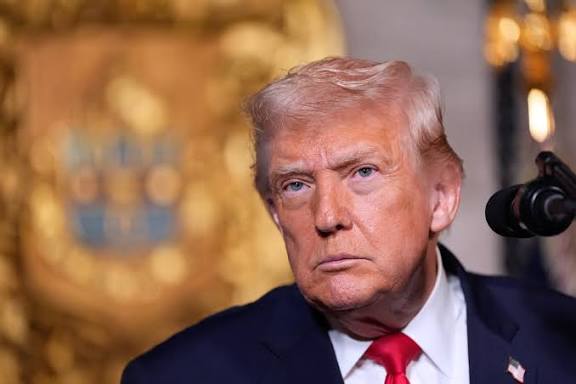

President Donald Trump on Christmas Day, December 25, 2025, announced that the United States had carried out a “powerful and deadly strike” against Islamic State (IS) targets in north-western Nigeria, asserting that the action was a direct response to what his administration describes as violent attacks on Christians in the region. In a statement posted on his Truth Social platform, Trump identified the targets of the U.S. military action as “ISIS Terrorist Scum in Northwest Nigeria, who have been targeting and viciously killing, primarily, innocent Christians, at levels not seen for many years, and even centuries,” and framed the operation as part of his broader counter-terrorism agenda. He added that U.S. defense forces “executed numerous perfect strikes, as only the United States is capable of doing,” and reiterated that “our Country will not allow Radical Islamic Terrorism to prosper.” Trump’s remarks harnessed stark rhetoric and reflected his characterization of the violence against Christians as an “existential threat,” a theme he has emphasized repeatedly in recent weeks.
According to official U.S. military sources, the operation took place in Sokoto State in north-western Nigeria, a region where Islamic State affiliates such as the group often referred to as “Lakurawa” have at times asserted influence. The U.S. Africa Command (AFRICOM) — the Pentagon’s command responsible for operations on the African continent — stated on social media that the strike was conducted in coordination with Nigerian authorities and that multiple ISIS militants were killed, though details on the precise number of casualties and the nature of the targets struck were not publicly disclosed. AFRICOM’s posts emphasized that the action was carried out with Nigerian consent and highlighted the ongoing security cooperation between the two countries.
AFRICOM’s initial announcement indicated the strike had occurred “at the request of Nigerian authorities,” though that particular phrasing was later revised in some versions of the command’s social posts. U.S. Defense Secretary Pete Hegseth also weighed in on social media after the operation, thanking the Nigerian government for its “support & cooperation” and suggesting that further military actions could be forthcoming if threats persisted. These remarks point to an operational partnership between the U.S. military and its Nigerian counterparts, even as the administration’s framing of the strike has drawn controversy.
The Nigerian Ministry of Foreign Affairs confirmed the joint action, underscoring that the strikes were part of “structured security cooperation with international partners, including the United States of America, in addressing the persistent threat of terrorism and violent extremism.” The ministry’s official statement stressed that such cooperation involved exchange of intelligence and strategic coordination, and that counter-terrorism efforts are guided by respect for international law, sovereignty, and shared security commitments. Abuja also reaffirmed its commitment to protecting all citizens, regardless of faith or ethnicity, framing the violence as an affront to national values rather than an issue of religious persecution alone.
Nigerian Foreign Minister Yusuf Maitama Tuggar provided further context in remarks to international media, describing the strike as a joint operation against “terrorists.” Tuggar did not explicitly endorse Trump’s characterizations of the violence as targeting a specific religious group and noted that the decision on future operations would be guided by ongoing discussions between Nigerian and U.S. leadership. His comments reflected Abuja’s emphasis on shared security goals while distancing Nigeria’s official stance from claims of unilateral foreign direction.
A presidential adviser to Nigerian President Bola Tinubu, Daniel Bwala, spoke with international outlets to reinforce that Nigeria views the actions of jihadist groups such as Islamic State affiliates and Boko Haram as affecting communities across religious lines. Bwala stated that although Nigeria welcomes assistance against extremist threats, the country remains a sovereign state responsible for its own national security decisions. He also reiterated that jihadist violence in Nigeria has historically impacted both Muslims and Christians, and that framing the conflict strictly in religious terms oversimplifies the complex dynamics at play.
While Trump’s announcement framed the U.S. strike as a response to attacks primarily on Christians, violence-monitoring groups and independent analysts have questioned that narrative. Organizations tracking political violence in Nigeria including data analysts like ACLED (Armed Conflict Location & Event Data Project) indicate that extremist violence has killed large numbers of civilians from multiple faiths, and that there is no clear evidence showing Christians are systematically targeted more than Muslims in the country’s broader insurgency and communal conflicts. These assessments underscore the contested nature of claims about the violence’s religious dimension.
Trump’s latest military action in Nigeria follows a period of escalating U.S. criticism of Abuja’s handling of religious violence, including his administration’s decision to designate Nigeria a “Country of Particular Concern” (CPC) under the International Religious Freedom Act. That designation — which can carry implications such as visa restrictions and potential sanctions — was justified by U.S. officials on the basis of what Trump described as an “existential threat” to Nigeria’s Christian population. However, Nigerian authorities and many international observers have rejected the framing, emphasizing the multifaceted nature of the country’s insecurity that includes jihadist insurgency, communal clashes, and competition over natural resources.
The designation of Nigeria as a CPC marked a significant diplomatic shift, as the country was previously listed under Trump’s first administration but was removed from the list during the subsequent presidency. The re-designation this year reflects the Trump administration’s heightened focus on religious freedom issues as intertwined with its foreign policy and security decisions, particularly in regions where religious identity intersects with longstanding conflicts.
Analysts note that Nigeria’s population is roughly evenly split between Christians and Muslims, and that violent extremist groups such as Boko Haram and Islamic State West Africa Province have targeted Nigerians across religious affiliations in various parts of the country. The insurgency in the northeast has been particularly pronounced over the past decade, with attacks on civilians, kidnappings, and clashes that have claimed thousands of lives. These dynamics complicate narratives that cast the conflict solely in terms of religious persecution.
Beyond the immediate operation in Sokoto State, U.S. officials have framed the strike within broader regional counter-terrorism efforts in West Africa. The Sahel and neighboring regions have seen increased militant activity by groups affiliated with global jihadist movements, prompting international concern. U.S. military engagement on the continent has historically included training, intelligence sharing, and limited strikes, though formal combat operations have varied over successive administrations. The Sokoto strike represents a notable escalation in direct U.S. action in Nigeria under Trump’s leadership.
Critics of the White House’s approach — including some foreign policy analysts and human rights organizations — have raised concerns that assertions of targeted religious persecution without clear evidence could inflame tensions within Nigeria’s already volatile security landscape. These commentators emphasize the importance of nuanced analysis that distinguishes between violent extremism and broader societal issues, arguing that mischaracterizations can have unintended consequences for local communities.
Supporters of the U.S. action, including some members of the American foreign policy establishment, argue that degrading extremist groups remains a necessary component of stabilizing regions where insurgents have exploited weak governance and security vacuums. Proponents contend that cooperation between the U.S. and Nigeria on defense and intelligence can help build capacity within Nigerian forces to better protect civilians and counter threats.
Nigerian officials have publicly underscored their long-standing engagement with international partners, including the United States, on security cooperation frameworks designed to counter violent extremism and insurgent groups. Abuja stresses that these partnerships are predicated on mutual respect and shared interests, rather than external coercion, and that efforts must be sustained to address underlying causes of instability rather than relying exclusively on military measures.
The Sokoto strike also occurs against the backdrop of internal debates within the United States about the country’s role in foreign military engagements. While Trump’s second administration has at times signaled a desire to reduce certain overseas commitments, his recent actions in Nigeria signal a willingness to deploy American military power when he deems it necessary to address threats or defend persecuted populations. This stance reflects broader discussions about U.S. strategic priorities and the balance between national security interests and humanitarian concerns.
Critics domestically have questioned the clarity of the evidence supporting assertions of systematic religious targeting in Nigeria, urging policymakers to ground decisions in comprehensive data from independent monitoring groups rather than partisan narratives. They also stress the need for careful calibration to avoid exacerbating local tensions or undermining Nigeria’s sovereignty.
Internationally, the strikes have drawn attention to the persistent security challenges in West Africa, where jihadist factions and armed groups continue to exploit governance gaps. Regional bodies and African partners have long advocated for holistic approaches combining military, political, and development strategies to address the root causes of insecurity and support sustainable peace.
As of late December 2025, the situation remains fluid. Both U.S. and Nigerian officials indicate that further coordination and potential operations will be guided by ongoing assessments of threats and mutual consultations. Nigerian leaders have reiterated a commitment to protecting all citizens and upholding national unity, even as they navigate complex relationships with powerful international partners.
The U.S. strike against IS targets in Nigeria thus stands as a significant development in international counter-terrorism cooperation, marked by strong rhetoric from Washington, operational collaboration with Abuja, and ongoing debate over the character and consequences of the violence it aims to address.