

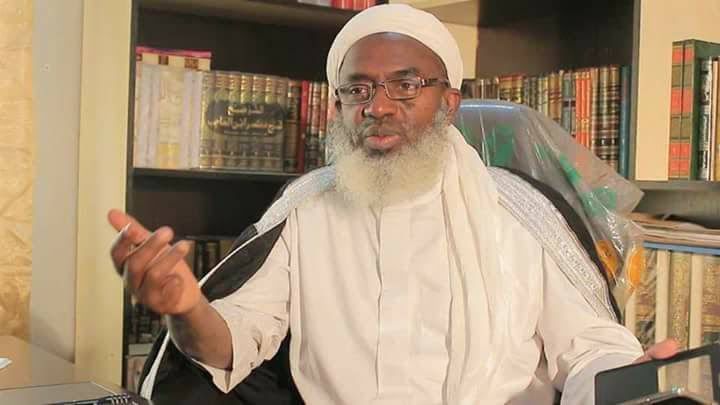

Islamic scholar Sheikh Ahmad Abubakar Gumi has called on the Federal Government of Nigeria to immediately halt all military cooperation with the United States in response to recent U.S. airstrikes targeting ISIS terrorist elements on Nigerian soil. The cleric’s demand, made in a statement on social media, strongly criticised the involvement of U.S. forces, describing the strikes as a threat to Nigeria’s sovereignty and internal cohesion. He argued that although combating terrorism is an obligation in Islam, such efforts must be pursued by “clean and holy hands,” not by foreign powers, which he accused of a history of inflicting civilian harm in other conflicts the United States has engaged in around the world.
The calls from the cleric follow reports that U.S. Africa Command, at the direction of United States President Donald Trump, conducted airstrikes against Islamic State militants in Sokoto State on Christmas Day. U.S. officials said the strikes were aimed at militants allegedly responsible for attacks on Christian communities, though both U.S. and Nigerian authorities have emphasised that extremist violence in Nigeria affects all communities, irrespective of religion.
In his social media remarks, Gumi argued that involving a foreign power in domestic counterterrorism runs the risk of transforming Nigerian territory into a “theatre of war.” He said that the strikes could attract anti-U.S. forces to Nigeria and inflame existing security challenges rather than resolve them. Gumi warned that framing the intervention as protection of one religious group might deepen fault lines in Nigerian society, emphasising that terrorism in the country has harmed Muslims, Christians, and other groups alike.
“There is a grave error in allowing foreign military involvement in Nigeria’s fight against terrorism,” the cleric stated. “Terrorists do not truly fight terrorists; they often end up killing innocent people under the pretext of fighting terror. No nation should allow its land to become a battlefield for the interests of external powers.” He suggested that Nigeria should seek military assistance from what he described as “neutral countries” such as China, Turkey, and Pakistan, which he argued could provide support without the geopolitical baggage he attributes to U.S. involvement.
Gumi also questioned the timing and location of the strikes, noting that Sokoto is predominantly Muslim and not generally considered an epicentre of Islamic State activity compared with other troubled areas such as Maiduguri in the northeast. He described the strikes as “symbolic” and politically motivated, asserting that they were orchestrated under the guise of protecting Christians and were likely to be exploited in the run-up to Nigeria’s 2027 general elections.
The Federal Government, through the Ministry of Foreign Affairs, confirmed that Nigeria remains engaged in structured security cooperation with international partners, including the United States, to tackle terrorism and violent extremism. A statement by the ministry emphasised that this cooperation is carried out within the framework of international law, mutual respect for sovereignty, and shared commitment to regional security. The ministry noted that intelligence sharing and strategic coordination have contributed to targeted operations against extremist groups in the North West.
Samuel Aina