

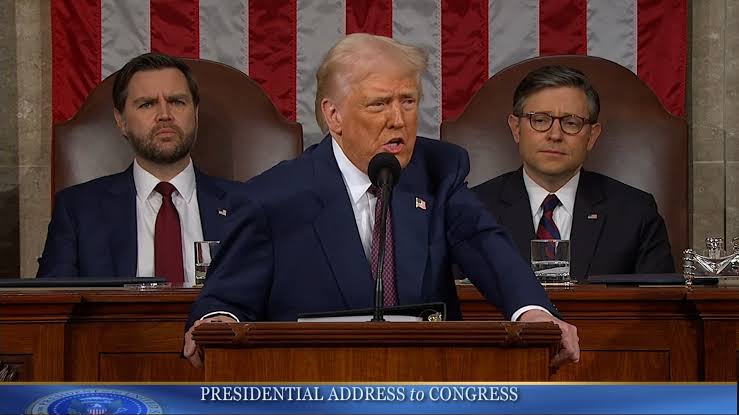

U.S. President Donald Trump has announced that Christmas Eve will be observed as a national holiday, a move that marks a notable shift in the federal holiday calendar and carries both symbolic and practical implications for governance, the economy, and American cultural life. The declaration, made just days before December 24, formalizes what had long been an informal or discretionary day off for many workers, particularly within the federal system.
Christmas Eve has traditionally occupied a grey area in the American calendar. While not officially recognized as a federal holiday, many government offices, financial institutions, and private companies have historically operated on shortened schedules or granted administrative leave. Trump’s declaration elevates the day to full national status, placing it alongside Christmas Day as an officially recognized holiday across federal institutions.
From an administrative standpoint, the decision immediately affects federal operations. Government offices will close fully, non-essential services will pause, and federal employees will receive paid leave. Financial markets and banks, which often already closed early on December 24, are expected to align more clearly with the new designation, further standardizing year-end shutdowns. Retailers and private employers, while not legally bound by the declaration, are likely to follow suit to remain competitive in labor markets.
The White House framed the decision as one rooted in cultural recognition and work-life balance. In remarks accompanying the declaration, Trump emphasized the importance of family, tradition, and national unity during the Christmas season, describing the holiday as a time when Americans should be encouraged to step away from work obligations and focus on personal and communal life. The move fits within Trump’s broader political messaging that emphasizes cultural identity and traditional observances.
Supporters of the decision argue that the formal recognition reflects reality on the ground. They note that productivity on Christmas Eve is often low, travel volumes are high, and many workplaces already operate informally as though it were a holiday. Codifying the day, they argue, reduces ambiguity and offers clarity to employers, workers, and institutions planning year-end schedules.
However, the declaration has also prompted discussion about its economic and policy implications. Critics point out that adding a national holiday increases the number of paid non-working days for federal employees, potentially raising costs in areas such as overtime for essential services and delayed administrative processing. Others question whether the decision sets a precedent for further holiday expansions, particularly around culturally or religiously significant dates.
There are also broader implications for inclusivity and governance. While Christmas remains one of the most widely observed holidays in the United States, some analysts have noted that the formal elevation of Christmas Eve may reignite debates about the balance between cultural tradition and religious neutrality in public policy. The administration has not indicated whether similar recognition might be extended to observances tied to other faiths or cultural communities.
Politically, the timing and framing of the declaration reinforce Trump’s ongoing appeal to his core base, which has often welcomed overt affirmations of traditional American customs. At the same time, the largely practical nature of the change has limited overt partisan backlash, with many state and local governments already accustomed to operating under reduced capacity on Christmas Eve.
In practical terms, the immediate effect will be felt most strongly in government offices, transportation scheduling, and financial services. Travelers may experience lighter administrative staffing but clearer expectations around closures, while businesses may adjust logistics and supply chains to account for the additional shutdown day.
As the United States approaches future holiday seasons, Christmas Eve’s new status is likely to become normalized, shifting how institutions plan their calendars and how workers perceive the boundary between professional obligations and personal time. Whether the move remains a one-off cultural gesture or signals a broader rethinking of public holidays under the Trump administration remains an open question.
What is clear is that the declaration has transformed Christmas Eve from a customary pause into an official moment of national observance, formally embedding it into the rhythm of American public life.