

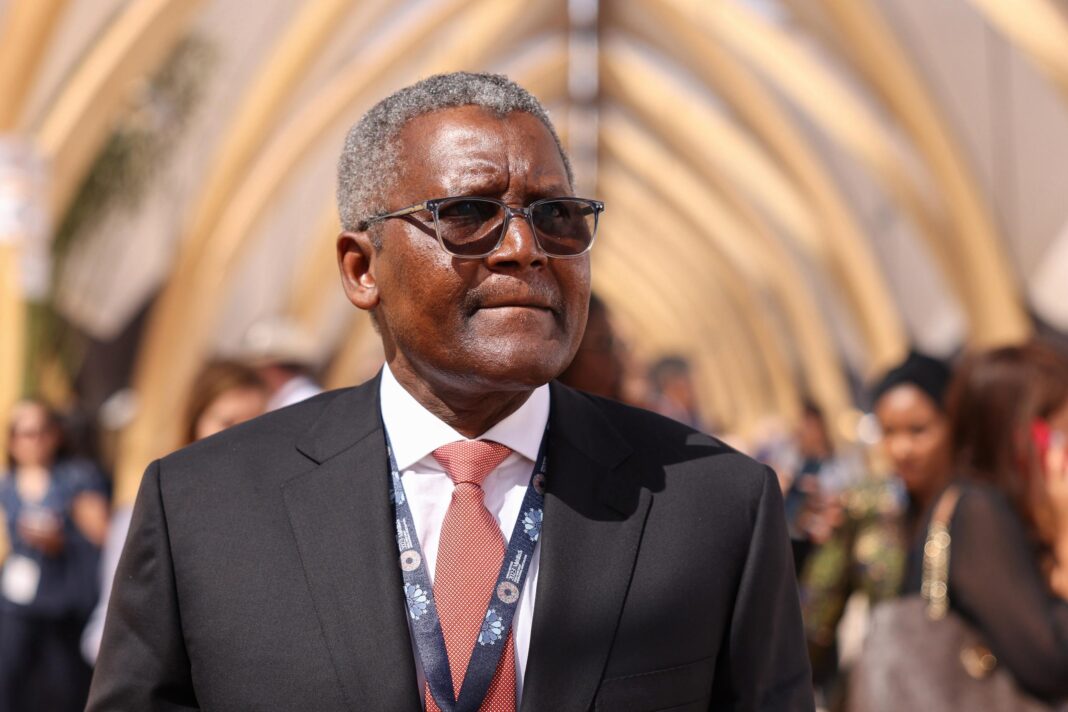

The Independent Corrupt Practices and Other Related Offences Commission has formally invited business magnate Aliko Dangote to appear before its investigative panel in Abuja in relation to a petition he submitted alleging corruption and abuse of office against the immediate past Chief Executive Officer of the Nigerian Midstream and Downstream Petroleum Regulatory Authority.
According to sources close to the anti-graft agency, the commission issued the invitation following receipt of a detailed petition from Dangote, chairman and chief executive of the Dangote Group, on December 16, 2025. In the petition, Dangote accused Engr Farouk Ahmed of corrupt enrichment, abuse of office, and misappropriation of public funds during his tenure as managing director of the regulatory authority. The allegations include claims that Ahmed used public resources to fund personal expenditures far beyond what could reasonably be justified by his earnings as a public servant, including the payment of millions of dollars in school fees for his four children at educational institutions in Switzerland.
The ICPC has constituted a specialised panel of senior investigators to examine the allegations contained in the petition, underscoring the seriousness with which the agency is treating the matter. The commission’s chairman, Dr Musa Aliyu, SAN, directed the investigative team to focus on the petition and ensure a thorough and impartial inquiry. Dangote is expected to either appear in person before the panel or be represented by his counsel, Ogwu Onoja, SAN, and submit relevant documentary evidence to support the claims. 
The invitation to Dangote signals the formal commencement of the probe into the allegations. Commission officials have emphasised that adherence to due process will guide the investigation. Under the provisions of the Corrupt Practices and Other Related Offences Act 2000, a public officer is prohibited from using their position of authority to confer an unfair or corrupt advantage on themselves or theirassociates, with penalties including imprisonment for those found guilty. The commission noted that Ahmed’s resignation from his position on December 17, 2025, does not preclude the investigation from proceeding, as public interest and statutory mandate require that credible allegations be examined regardless of changes in office.
Dangote’s allegations have drawn significant attention because they juxtapose claims of regulatory bias with broader concerns about institutional accountability. Before submitting his petition to the ICPC, Dangote had publicly questioned the licensing practices of the Nigerian Midstream and Downstream Petroleum Regulatory Authority, including the issuance of fuel import licences that he argued undermined domestic refining capacity and favoured international traders. Those regulatory disputes had previously escalated to litigation, with Dangote Petroleum Refinery and Petrochemicals FZE filing a N100 billion suit in the Federal High Court in Abuja, challenging certain licence awards. Although that suit was discontinued in July 2025, tensions between Dangote and regulatory authorities persisted.
In the week preceding the ICPC’s invitation to Dangote, a coalition of civil society organisations published a statement defending Farouk Ahmed, insisting that no verifiable evidence had been presented to substantiate claims of corruption and asserting that his leadership had promoted fairness and transparency within the regulatory framework. The groups urged a balanced and evidence-based approach to allegations of misconduct in public office.
The ICPC is empowered to investigate allegations of corrupt practices irrespective of the profile of the complainant or the individual accused, and to make determinations based on evidence presented during the course of formal inquiry. Inviting Dangote to adopt and support his petition with documents is a standard procedural step before ICPC isolates specific issues and, if necessary, invites responses from the subject of the complaint.
Samuel Aina