

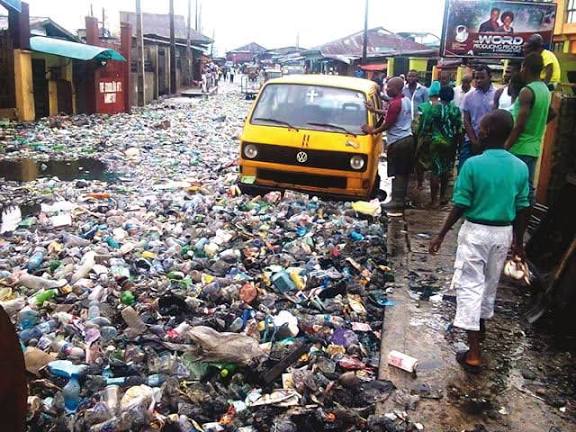

“There’s a particular place around my area where wastes were normally disposed of. It’s not a disposal center, but people chose to dump waste items there,” these are the words of Raheem Anifa, a Lagos resident who shared her experience about waste management in her residence.
To avoid foul odours and rotten defecation that normally litter the area, Anifa prefers risking her safety to pass on highway instead of trekking the designated route whenever she is navigating her way.
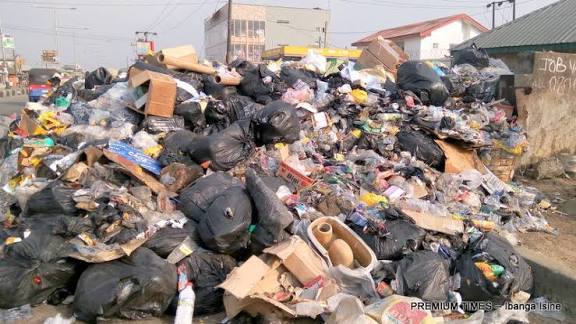
Lagos State, Nigeria’s megacity housing over 20 million of the country’s population, has become tragically locked in a spell of indiscriminate waste disposal, leading the pack among other states trapped in the menace of unsanitary environments.
The state needs 1,300 compactor trucks to take care of its 15,000 metric tons of refuse daily.
From public health crisis to sewage blockage, flooding, foul odour, to mention few — the implications of the polluting environments are enormous — fueling ripple effects on the residents.
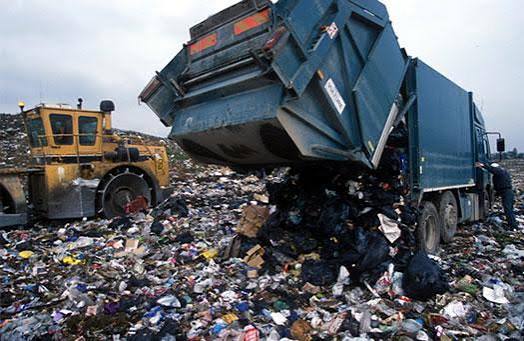
Experts warn, any outbreak of waterborne disease such as diarrhoea or cholera resulting from poor sanitation would overturn the public health system in the state.
A report by the Nigerian Centre for Disease Control (NCDC) shows that cholera claimed 2,323 lives out of 69,925 cases recorded in 2021 across Nigeria, including Lagos State.
Twenty five percent of diseases reported in Lagos hospitals are caused by environmental pollution, claimed Lagos State Environmental Protection Agency (LASEPA).
The above data is alarming. A study by the World Bank estimates that ambient air pollution resulted in 11,200 premature deaths in Lagos, the highest in West Africa. Other reports suggest this figure may be as high as 30,000 annually.
Children under five seem mostly affected, accounting for nothing less than 60–percent of the premature deaths recorded from air pollution.
Responding to the crisis, the state government has resorted to numerous actions to curb the menace.
Crackdowns on Violators
The recent arrest by the Lagos authorities features among several ways the state government is heightening its fight against unlawful waste management — strengthening the state’s commitment to maintain environmental cleanliness and enforcement of sanitation laws.
Three individuals were under custody for illegally dumping waste at an unauthorised location in the Ayobo area. This was disclosed on 16th December, by Tokunbo Wahab, the state’s Commissioner for Environment and Water Resources, through his X handle.
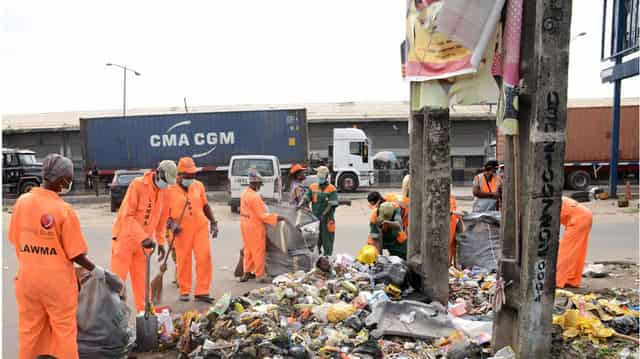
The suspects, identified as Awosunle Akinola (65), Adepeju Seun (47), and Solamipe Akanwo, were apprehended during an overnight enforcement operation conducted by Waste Infractions Surveillance and Investigation Teamof the Lagos Waste Management Authority (LAWMA).
The arrested individuals were handed over to LAWMA’s legal team at the Oshodi Taskforce office for prosecution. Upon conviction, offenders are liable to fines of up to N250,000 or a three-month jail term under the Lagos State Environmental Management and Protection Law 2017.
Although Anifa admitted to the implementation of the environmental laws in some other parts of Lagos State, she doubts similar moves in her area. This plays a major role as violators continue to litter the community with impunity.
“There was a time when a bus by LAWMA would always come to pack away people’s dirt, waste bin and the like,” Anifa says, suggesting how the government can record more success. “If the state govt can make use of this tactic again, the unsanitary environment can be improved,” she continues.

Experts Weigh In
Babatunde Ajayi, the General Manager of LASEPA, underlines the link between environmental pollution and health crisis, noting that health and environments are inseparable.
Mr Ajayi reveals that 74 companies were sanctioned for violating environmental legal framework in 2025 alone. He points to his agency’s commitment in prioritising complaints over sanctions, with consistent awareness and sensitisation programs for stakeholders.
From his own part, Antonio Ayodele, the former LASERA Boss, emphasises on the dangers of water pollution. He states that about 60–percent of Lagos water bodies often receive polluted waste.
“In the past, as a young person growing up in Lagos, I was often glad to swim in the lagoon, but not any more because of the polluted water bodies.”
He also observes, “many industries in Lagos lack treatment plants,” while those that possess the machine are losing interest to operate them because of costs.
Why Government Needs to do More
From Iyanapaja to Abule Egba, Kola to Alakuko, Gbolahan Badru goes a day without witnessing indiscriminate waste disposal.
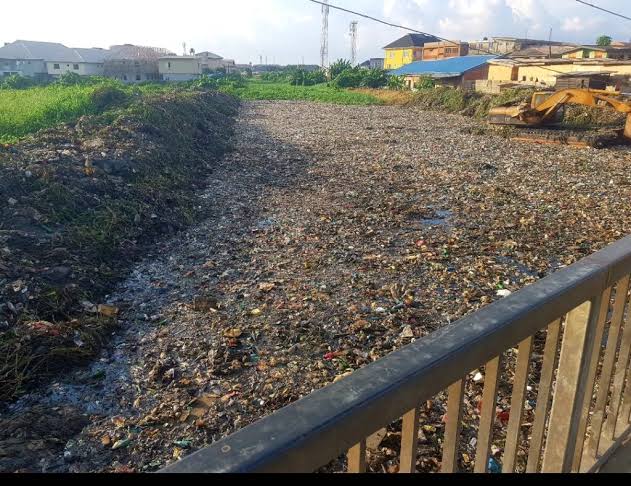
His biggest concern lies in the overwhelming practice of the illegal activity during the rainy season, leading to drainage blockages that worsen flooding, damage roads, and expose residents to health hazards.
“Sometimes, you will see refuse dumped by roadsides, inside drainage channels, on undeveloped and under-construction infrastructures. Even sometimes just a few meters away from residential buildings.”
“Many people see improper waste disposal as routine rather than something harmful and hazardous.”
According to Badru, the crisis is driven by a combination of factors: poor environmental attitude, culture of impunity, inadequate access to waste collection services, among others.
He argues that weak environmental education provides people with little to no understanding of the long–term consequences of their actions — with poverty and overcrowding in the state further compounding the problem, as environmental responsibility seems secondary to daily survival.
Therefore, Badru urges the government to focus more efforts on public education, accessible waste disposal infrastructures, and community involvement.He believes crackdowns and fines can deter offenders in the short term, as sustainable change requires a mix of enforcement and enlightenment.
“I mean people must be made to understand why proper waste disposal matters, not just for fear of punishment,” he said. “Law can’t regulate everything. When citizens feel included and supported, compliance becomes voluntary rather than forced.”
Although Badru commends the government’s efforts, he insists there should be more sensitization.