

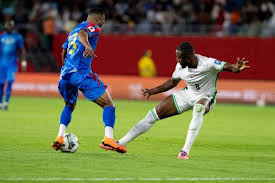

The Nigeria Football Federation (NFF) has confirmed that it has initiated a probe into the alleged use of ineligible players by the Democratic Republic of Congo (DR Congo) during the African play-offs of the 2026 FIFA World Cup qualifiers, a development that could potentially reopen Nigeria’s path to qualification for the tournament to be hosted by the United States, Canada and Mexico. The federation said it has formally raised concerns with FIFA following DR Congo’s penalty shoot-out victory over Nigeria in November, which had initially brought the Super Eagles’ qualification campaign to an end.
Nigeria were eliminated from the African play-offs after losing 4–3 on penalties to DR Congo in a tense encounter played in Morocco. The match ended goalless after regulation and extra time, before DR Congo prevailed in the shoot-out, a result that denied Nigeria a place in the FIFA intercontinental play-off and appeared to condemn the country to missing a second consecutive World Cup.
Following that victory, DR Congo were handed a bye into the final of the intercontinental play-off tournament, where they are scheduled to face the winner of the semi-final between New Caledonia and Jamaica. However, their participation at that decisive stage could now be in doubt as the NFF presses its case over the eligibility of several Congolese players fielded during the African play-offs.
According to the NFF, concerns have been raised over between six and nine DR Congo players who switched national allegiance before representing the country. The federation alleges that these players may not have fully complied with eligibility requirements under Congolese law prior to featuring in the play-off matches, an issue it believes warrants further scrutiny by FIFA.
While FIFA is reported to have cleared the players on the basis that they possessed valid DR Congo passports, the NFF contends that the process was incomplete and potentially misleading. The federation argues that the players allegedly failed to formally renounce their previous citizenships, a requirement under the DR Congo constitution, which does not permit dual nationality.
An NFF executive board member confirmed that the federation had taken concrete steps to pursue the matter with world football’s governing body. “NFF has done the needful,” the official said, adding that DR Congo’s constitutional provisions on citizenship formed the basis of the complaint and that relevant documents had been submitted to FIFA to support Nigeria’s position.
The NFF General Secretary, Dr Mohammed Sanusi, also confirmed that the federation has formally faulted the players’ switch of allegiance. He said the issue was not whether FIFA regulations allow a player to represent a country once he holds a valid passport, but whether the underlying domestic legal requirements were properly satisfied before those passports were obtained.
“FIFA rules say once you have a passport of your country, you’re eligible, and that is why they were cleared,” Sanusi said. “But our concern is that FIFA was deceived into clearing them. It is not FIFA’s responsibility to enforce Congo’s domestic regulations; FIFA acts based on what is submitted to it. What we are saying is that the process was fraudulent.”
Sanusi further explained that several of the players in question reportedly still held European passports, including French, Dutch and other nationalities, which he said was inconsistent with Congolese law. He added that the NFF was awaiting FIFA’s response after submitting its petition and supporting documentation.
The development has renewed hope within Nigerian football circles that the Super Eagles’ World Cup campaign may not yet be over, after the country missed out on the 2022 tournament in Qatar. DR Congo, for their part, have appeared at the FIFA World Cup only once, in 1974, when the country competed under the name Zaire, and now face uncertainty over their place in the final phase of qualification pending the outcome of the probe.