

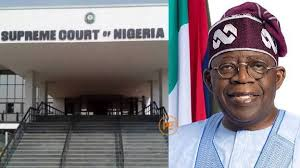

Nigeria’s Supreme Court on Monday affirmed the constitutional authority of the President to declare a state of emergency in any state of the federation to avert a breakdown of law and order, ruling in a split six-to-one decision that such powers are firmly rooted in the 1999 Constitution. The apex court held that the President may, in appropriate circumstances, adopt extraordinary measures to restore normalcy, including the temporary suspension of elected state officials during the period of emergency.
The landmark judgment upheld the President’s powers under Section 305 of the Constitution, which provides for the proclamation of a state of emergency where public order and safety are threatened. In its majority decision, the court found that the Constitution envisages situations requiring decisive executive intervention and grants the President the authority to act to prevent chaos, anarchy, or the collapse of governance at the state level.
Delivering the lead majority judgment, Justice Mohammed Idris held that Section 305 empowers the President to take extraordinary steps once a state of emergency has been validly declared. He noted that while the Constitution expressly provides for the declaration of such an emergency, it does not itemise or limit the specific measures the President may take to address the situation, thereby leaving room for discretion based on prevailing circumstances.
Justice Idris explained that the absence of a detailed definition of “extraordinary measures” in the Constitution was deliberate, as emergencies are by nature unpredictable and varied in scope. According to him, the framers of the Constitution intended to vest the President with sufficient flexibility to respond effectively to threats to public order, provided such actions are taken in good faith and for a limited duration aimed at restoring democratic governance.
The ruling arose from a suit challenging President Bola Tinubu’s declaration of a state of emergency in Rivers State, during which elected state officials were suspended for six months. The plaintiffs in the case were the Attorneys-General of states governed by the Peoples Democratic Party, who argued that the President’s actions amounted to an unconstitutional interference with democratically elected state governments.
The plaintiffs were the Attorneys-General of Adamawa, Enugu, Osun, Oyo, Bauchi, Akwa Ibom, Plateau, Delta, Taraba, Zamfara, and Bayelsa states, while the defendants were the Federal Government of Nigeria and the National Assembly. The suit, marked SC/CV/329/2025, was filed at the Supreme Court under its original jurisdiction, and judgment in the matter had been reserved since October.
In their submissions, the plaintiffs raised fundamental constitutional questions, asking the court to determine whether the President has the authority to suspend a governor, deputy governor, or members of a state House of Assembly under the guise of a state of emergency. They also questioned whether the President could lawfully replace such elected officials with an unelected sole administrator without violating the principles of federalism and democratic governance enshrined in the Constitution.
Addressing the issue of jurisdiction, Justice Idris upheld the preliminary objections raised by the defendants, ruling that the plaintiffs failed to establish a cause of action capable of activating the Supreme Court’s original jurisdiction. He held that the states did not demonstrate the existence of a concrete dispute between themselves and the Federation as required by law, and consequently struck out the suit for want of jurisdiction.
Despite striking out the suit, the court proceeded to consider the substantive issues raised and dismissed the case on the merits. In the six-to-one majority decision, the justices agreed that the plaintiffs had not shown sufficient legal grounds to invalidate the President’s actions under Section 305, thereby reinforcing the scope of executive powers during a declared state of emergency.
However, the decision was not unanimous. In a dissenting judgment, Justice Obande Ogbuinya agreed that the President possesses the constitutional authority to declare a state of emergency but disagreed with the majority on its consequences. He held that while such a declaration is lawful, it does not extend to the suspension of elected governors, deputy governors, or members of state legislatures, arguing that such actions undermine constitutional democracy and the autonomy of the states.