

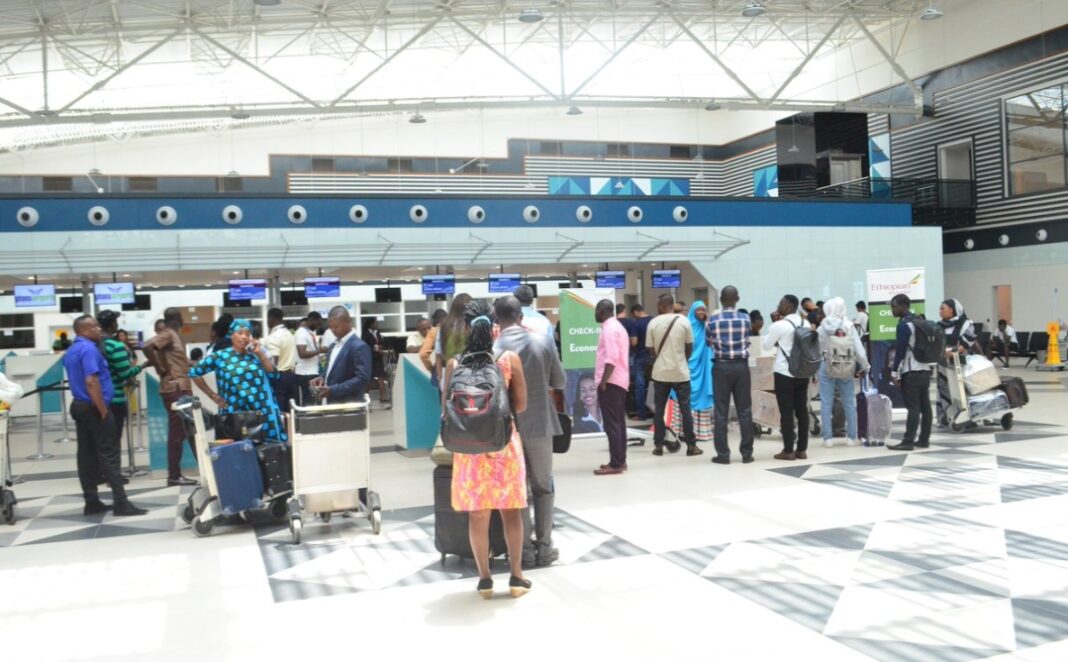

The Economic Community of West African States (ECOWAS) says all air ticket taxes will be abolished across airports in the subregion from January 1, 2026, as part of efforts to significantly reduce airfares and boost regional travel.
Chris Appiah, ECOWAS director of transport and communications, disclosed this on Wednesday in Abuja during an interview with journalists on the sidelines of the ECOWAS Council of Ministers’ meeting.
Appiah said the move follows a sweeping regional air transport policy approved by the ECOWAS Authority of Heads of State and Government in December 2024. The decision, he explained, seeks to make air travel more affordable and strengthen economic integration across West Africa, where airfares remain among the highest on the continent.
“If you buy a typical ticket in West Africa on any of the airlines, you realise that about 64 per cent, sometimes it will be 70 per cent, of the ticket price is as a result of taxes and charges,” he said.
“From 1st January 2026, the Heads of State have agreed that all Member States should remove taxes on air transport. These taxes are against the International Civil Aviation Organisation’s guidelines and suppress demand rather than support growth.”
Appiah said nearly a decade of studies conducted by ECOWAS confirmed that West Africa has the most expensive air transport services in Africa, largely due to excessive taxes and aviation charges imposed by governments.
He said the new policy is central to the bloc’s integration agenda, which depends heavily on connectivity and the free movement of people, goods, and services.
“What these taxes do is suppress demand, and air transport is not growing to support tourism, health, education and other sectors,” he said.
“If you want to buy goods from Lagos to Dakar, for instance, a trader will not pay less than $3,000 in tickets, and a lot of that is taxes.”
The ECOWAS director added that consultations are underway with airlines to ensure that once the taxes are removed, ticket prices will be reduced accordingly to benefit citizens.
Appiah noted that other African regions have more competitive airfares because their charges are lower, pointing out that ticket charges in West Africa are sometimes up to 67 percent higher than in other parts of the continent.
This disparity, he said, is part of the reason airlines such as Ethiopian Airlines, South African Airways, and Royal Air Maroc “are doing very well, while our region is suffering.”
He said ECOWAS is now working closely with member states, their parliaments, and aviation stakeholders to ensure full implementation of the policy ahead of the January 2026 deadline.