

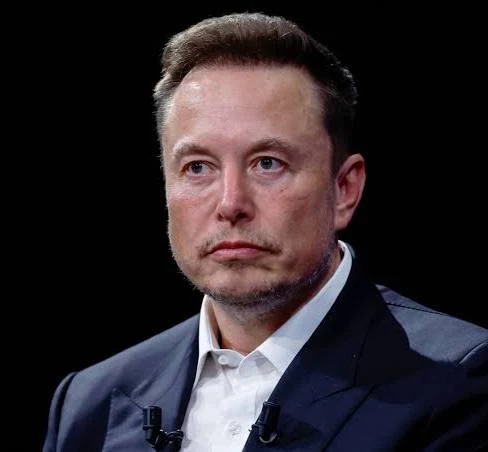

In a landmark decision on December 5, 2025, the European Commission fined Elon Musk’s social-media platform X €120 million (roughly US$140 million) for violating several key provisions of the bloc’s sweeping digital-services law. This represents the first major enforcement action under the Digital Services Act (DSA) since it came into effect — a strong signal that regulators in Brussels are now willing to hold global platforms accountable.
According to the Commission, X was found guilty of three main breaches: allowing “blue-check” verification marks to be purchased by anyone (without meaningful identity verification), failing to maintain a transparent and accessible ad-advertisement repository, and obstructing researchers’ access to public data — undermining transparency and exposing users to risks such as impersonation scams, misleading ads, and manipulation.
Specifically, the fine breaks down into roughly €45 million for the misleading verification system, €35 million for deficient ad-transparency practices, and €40 million for restricting data access to researchers. Although the potential ceiling under the DSA could reach as high as 6 % of a company’s global revenue, regulators noted the fine was set “proportionally.”
Implications and Fallout
The ruling has stirred a heated reaction. Musk promptly condemned the decision, describing the EU as a “bureaucratic monster” and asserting that the penalty targeted him personally. On the political front, some U.S. officials have framed the fine as part of a broader critique of European regulation targeting American tech firms — intensifying tensions between Brussels and Washington.
For European regulators, the fine is a statement of purpose. As the first enforcement under the DSA, it establishes a precedent for accountability: social-media platforms with global reach must comply with transparency, user-safety, and data-access rules if they wish to operate in EU markets.
The decision also raises larger questions for the global tech industry. Increasingly, cross-border digital platforms — many based in the U.S. — must navigate not just domestic regulation, but also diverse, stricter regulatory regimes abroad. The cost of non-compliance now includes not only fines, but potential reputational damage, disrupted advertising operations, and increased scrutiny from regulators and civil-society actors worldwide.
From a user-perspective, the ruling could lead to safer, more transparent social-media spaces, especially in areas like ad-disclosure, impersonation prevention, and public-data access for independent research. But for X (and similar platforms), it may also necessitate deeper structural changes: updating verification protocols, redesigning ad-system architecture, and committing to ongoing compliance — all while balancing free-speech ideals with regulatory obligations.
In conclusion, the EU’s fine on X and Elon Musk marks a defining moment: the era of “wild-west” tech liberalization is being met with tighter regulatory guardrails. Whether this will curb the excesses of Big Tech or trigger further clashes between regulators and tech entrepreneurs remains to be seen — but for now, the message is clear: compliance with transparency and user-protection standards is non-negotiable in Europe.