

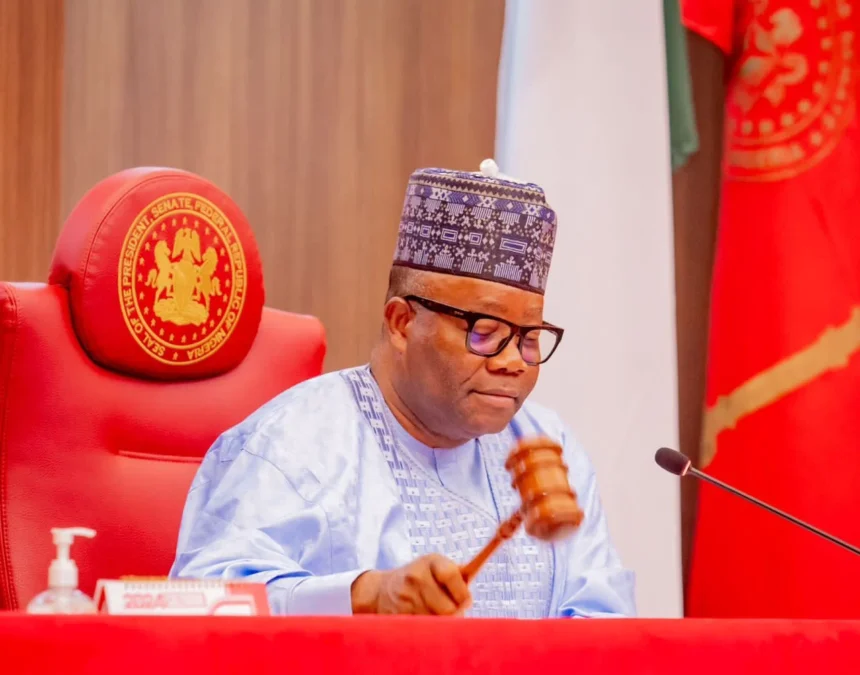

The Nigerian Senate on Tuesday gave formal consent for the deployment of Nigerian troops to the Republic of Benin after President Bola Ahmed Tinubu formally sought legislative approval for a peace support operation, a move the Senate said was necessary to restore order and avert a wider humanitarian crisis in the sub-region. Senate President Godswill Akpabio told colleagues that the request had been considered in the Committee of the Whole and approved in line with Section 5 Part II of the 1999 Constitution, which requires legislative endorsement for the commitment of Nigerian forces beyond national borders.
Nigerian authorities had already moved swiftly to assist Benin after an attempted coup over the weekend threatened the capital, Cotonou, and saw a group of soldiers briefly seize state television and clash with security forces. Abuja’s intervention included the deployment of fighter aircraft and ground forces at the invitation of President Patrice Talon and with backing from the Economic Community of West African States ECOWAS, whose standby force was also dispatched to help stabilise the situation. Government sources described the Nigerian response as an emergency measure to dislodge mutinous elements and prevent the collapse of constitutional order in a neighbouring state.
In the Senate chamber, Akpabio framed the intervention as both a legal and moral duty, saying in effect that instability on Nigeria’s borders could not be contained and would inevitably spill across frontiers. He characterised the move as an act of regional solidarity intended to preserve peace and protect civilians, and he said senators voted overwhelmingly in favour of the president’s request. Several leading national news outlets reported that the House acted with unusual expedition to provide Abuja with the legislative cover required under the constitution, signalling a unified posture among the political class in the face of what they called a direct threat to regional stability. 
For the Presidency, the calculus is clear. A failed or successful coup in Benin could create a vacuum exploited by jihadist groups operating in the borderlands and by criminal gangs that already traffic arms and narcotics across the region. That logic underpinned appeals by some security commentators for a rapid and robust response.
The intervention has not been uncontested. The Alliance of Sahel States, a grouping of military-led governments that withdrew from ECOWAS in recent years, condemned what it called violations of sovereignty after a Nigerian transport aircraft made an emergency landing in Burkina Faso, and its crew was briefly detained. That incident elevated tensions and highlighted how quickly regional security calculations can become entangled with diplomatic frictions. At the same time, ECOWAS leaders insisted that their actions were aimed solely at restoring constitutional order in line with established regional protocols.
Samuel Aina