


The Senate of the Federal Republic of Nigeria has formally proposed that the three-digit number 112 be adopted nationwide as the uniform number for reporting emergencies. Under the proposal, any Nigerian would be able to call or text “112” to report emergencies, medical emergencies, accidents, fires, crimes, or any distress, rather than relying on the array of disparate emergency-response numbers currently in use across different agencies. The move seeks to simplify emergency reporting, improve response times, and eliminate confusion arising from multiple, agency-specific helpline numbers.
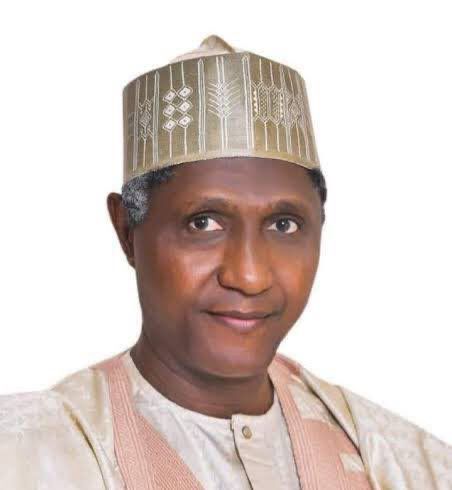
The sponsor of the bill, Senator Abdulaziz Yaradua, explained during the lead debate that Nigeria today maintains a patchwork of emergency lines operated by various state and federal agencies. He argued that such multiplicity constitutes a significant impediment to prompt and coordinated responses when emergencies occur. A unified number, such as 112, he noted, is easier to learn, remember, and dial, especially during high-stress situations, and would facilitate faster mobilisation of response agencies.
Supporters of the bill note that 112 has already been established in practice across many parts of the country through the work of the Nigerian Communications Commission (NCC) and its network of Emergency Communication Centres (ECCs). According to NCC records, ECCs linked to 112 currently operate in 27 states, offering toll-free access for emergencies, including fire outbreaks, accidents, crime incidents, and medical crises.
The ECC network has reportedly been effective in handling a large volume of distress calls. For example, one documentation shows that in an eight-month span, the centres processed over 33 million calls, routing them to appropriate first-responder agencies such as the police, fire services, ambulance services, and disaster-management agencies.
Despite those operational strides, full nationwide adoption of 112 has remained incomplete. Some states continue to maintain their own emergency lines, and public awareness of 112 as the primary emergency contact is uneven. Multiple numbers, unreliable ambulance and emergency-medical services, and poor infrastructure, including inadequate road networks and network/connectivity issues, have undermined the effectiveness of emergency response even when 112 calls are made.
Under the present proposal, the Senate seeks to give legal backing to 112 as the single national number. Previous legislative efforts include the passage of a bill in 2021 aiming to establish a nationwide toll-free emergency number. Under that proposal, 112 would serve as Nigeria’s equivalent of the 999 number in the United Kingdom or 911 in the United States, linking callers to all emergency services in one call. 
Samuel Aina