

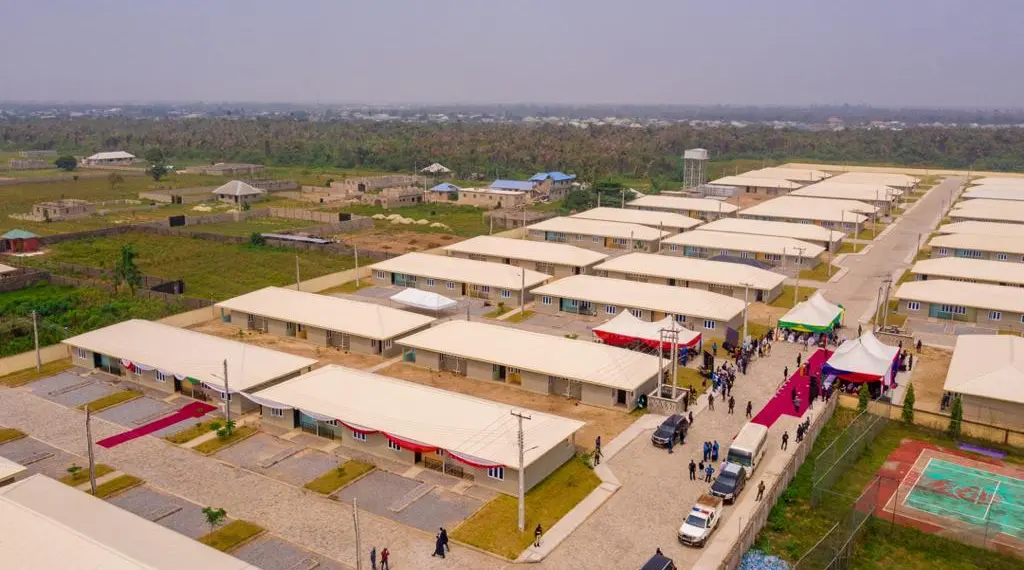

The Lagos State Government has introduced the Lagos State Tenancy and Recovery of Premises Bill 2025, a comprehensive proposed legal framework set to redefine the rights and responsibilities of landlords, tenants, and real estate agents in Nigeria’s bustling commercial capital. The bold legislative move aimed at curbing long-standing exploitative practices that has marred Africa’s most populated city for years.
The proposed bill, which has passed its second reading, is now under committee review, representing the most significant attempt in over a decade to regulate a rental market plagued by exorbitant advance payments, fraudulent agents, and unchecked landlord excesses.
For millions of Lagos residents, navigating the Lagos housing market always comes with dimensional woes, with immense financial strain and insecurity.
The existing 2011 Tenancy Law, which was criticized as outdated and ineffective, failed to address uncivilized practices like advance demand of more than one year of rent upfront — leaving millions of tenants in privations and homelessness.
With a landscape of poorly regulated agents, coupled with a commonly known snail–pace judicial process for disputes, the system has become a shield for abuse. Meanwhile, the new bill directly targeted to fill the gap of these systemic failures, seeking to instill transparency, accountability, and fairness into one of Africa’s largest and most pressurized real estate markets.

Notable Reforms Proposed by the New Bill
The legislation pegged landlords’ advance demand at the maximum of one year, and three months’ rent from a tenant who settles his due on a monthly basis — a provision lauded as a potential game-changer.
Critically, the law stipulated penalties for both parties against the event of contravention. Any landlord who demands or any tenant who willingly pays above the set limit faces a fine of up to N1,000,000 or a jail term of three months. This measure directly addressed one of the most acute barriers to housing affordability in Nigeria’s megacity, where astronomical lump-sum payments have long been the norm.
All individuals acting as agents must now be formally registered with the Lagos State Real Estate Regulatory Authority (LASRERA), capping their commission at five percent of the annual rent. This is a parallel effort to clean up the industry’s intermediary sector, with the bill imposing rigorous regulations on real estate agents.
In a bid to combat fraud while promoting transparency, every amount collected from tenants will now be remitted to the landlord within seven working days, accompanied with issuance of proper receipts. The penalties for operating outside these rules are severe, including fines, imprisonment for up to two years, and orders to repay illicitly collected funds.
This crackdown responded to widespread reports of scams, such as Campus Reporter’s article that exposed how unlawful ejections have left helpless families homeless in the country’s megacity.
The bill explicitly criminalized self-help eviction tactics, a commonly brutal practice where landlords forcibly ejected tenants by cutting off utilities, changing locks, or even employing threats of violence. Under the new law, any attempt to evict a tenant without a valid court order becomes a criminal offence punishable with a fine of N1,000,000 or six months imprisonment.
Furthermore, while the bill does not institute direct rent control — a disappointment to some tenant advocates — it grants a powerful new legal recourse to tenants, coined as the right to challenge unreasonable rent increases in court.
The above provision means that a landlord cannot evict a tenant while such a challenge is pending, and the court is instructed to consider comparative market rates, witness evidence, and special circumstances in determining such disputes. This provision provided a critical shield in a city where overnight rent hikes of 50 to 200–percent are not uncommon.
The bill also introduced fast-track procedures for tenancy cases, requiring courts to hear matters within 14 days of filing. It also made provision for sittings on weekends, public holidays, and virtually, with mediation processes now limited to a maximum of 30 days.
Lagos as an Epicenter of Homelessness — Data
Nigeria has the world’s largest number of homeless people with 24 million of its population not having homes to live in. Aside from the 24 million homeless people, many more do not have appropriate access to a proper dwelling such as water, electricity and a good road network.
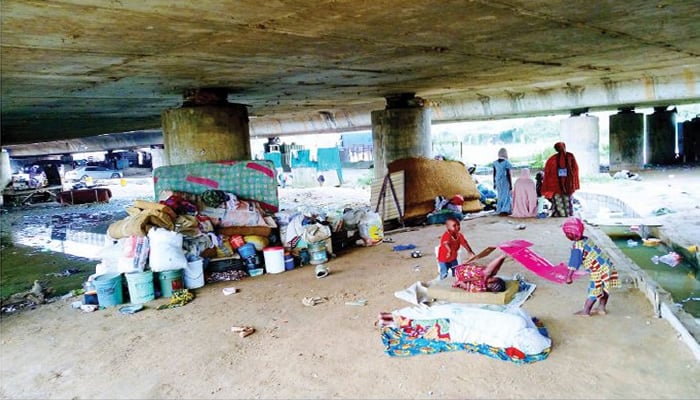
Between 2015 and 2017, more than 30,000 Lagos residents were forcibly evicted from their homes, as many houses were demolished. In the space of the two years, women and children were disproportionately affected by such evictions, especially in waterfront communities.
Findings have also shown that about two-third of the city’s residents live in informal settlements that include unapproved developments, abandoned or partially completed buildings.
These reforms aimed to redress a judicial system where eviction and tenancy disputes languished for years, drained resources, and prolonged uncertainty for all parties. Additional clauses mandated transparency in security deposit management, compelled landlords to provide bi-annual accounts for service charges, and explicitly enshrined tenants’ rights to privacy and quiet enjoyment of their homes.
As of press time, the bill is still under review by the Committee on Housing, with its passage into law signifying a transformative step toward stabilizing Lagos’s chaotic rental landscape. This offered a framework that protects the vulnerable while aiming to professionalize the sector for the long-term health of the city’s economy.
The bill is not just about a piece of legislation, it is a proposed blueprint for a more equitable and functional urban future. For tenants who have navigated a market described as a wild west, it created a promise of greater security; for legitimate landlords and agents, it provided a clearer, more standardized operating environment.