



While some may argue that a country should make sure that all students study the same national curriculum in school before college, it is pertinent we take a converse stance in this delicate issue and when we consider the need for students to make optimal use of their time, their need to attain a level of perfection before college and a fair method of accessing students performance, we believe that the nation should provide room for students to study using varying curriculum during their academic years preceding college.
What’s the need of studying a subject you have no interest in or predilection for? This question is very important for the student. For example a student with a strong predilection for the arts and humanities is forced to study science subjects such as physics, which he will perform poorly in does not appeal to basic human reasoning. A student’s curriculum should mirror his interests and should be those fields that he is more likely to succeed in.
Before one gets to college, there have to be a level of mastery one needs to attain, this will be cumbersome if every student is to use the same general curriculum as it’s not possible to attain this mastery in the limited amount of time pre-college in all the fields that one studies if we are a society where the curriculum is general and uniform for all students. We can see from our higher institutions in third world countries such as Nigeria that the college students are handicapped because they are now taught more advanced topics in their chosen field of study and they do not have the necessary foundation knowledge that is required before they reach the level of college.
Finally how can we access the students fairly in quizzes, tests, exams and projects if a bulk of their curriculum are subjects that they have no interests in. How do you judge a art inclined student based on his performance in the sciences and vice versa for the science inclined student. Hence, we can see that to judge a student fairly , it should be on a curriculum structured according to subjects he have a strong predilect to.
We mighty reason that allowance of a general curriculum will give every student a fair shot at accessing all paths and deciding convincingly about whatever path they wish to choose, and not cancelling a path due to phobia. This should be noted because we have seen students who might not have been particularly good at a path initially but over time, excel exceptionally in that same path. The renown surgeon Ben Carson comes to mind as a good example, however this sampling case have not proven to always be true as students have been further discouraged academically when they keep getting low grades in subjects they have no interests in whatsoever.
We have seen from a variety of valid points raised that it will be more beneficial to the students if they are given tailored curriculum according to their area of strengths before college as this will also give them an added advantage of attaining the needed perfection in their chosen path, and also make their academic grading fairer.
n extending this conversation beyond pre-college education, it is important to connect the role of tailored curricula with the ultimate goal of preparing students for tertiary education and the demands of a globalized economy. As the World Bank emphasizes, tertiary education is no longer a luxury but a fundamental requirement for participation in the sectors that drive national development. Doctors, teachers, scientists, engineers, and managers—professions that are indispensable in the 21st century—require solid preparation well before the college years. Ensuring that students study along pathways that match their strengths and interests is therefore not only fair, but strategic in building the human capital that economies depend on.
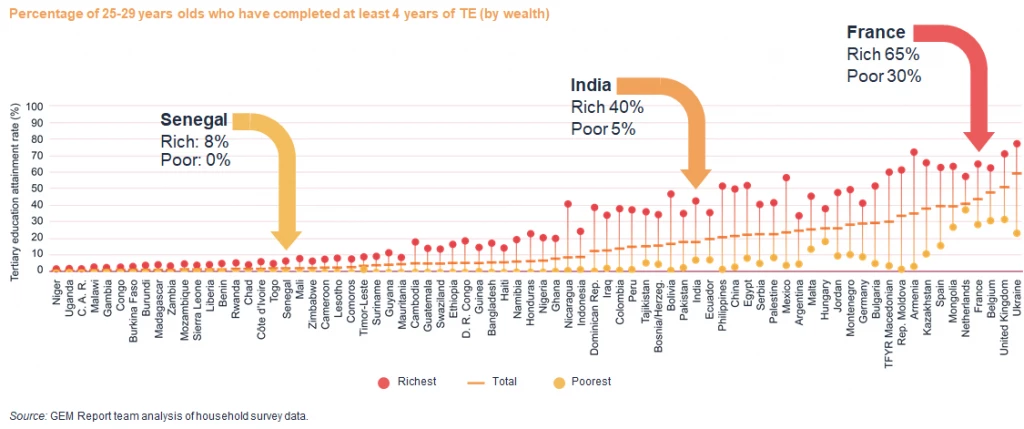
The World Bank, which has been involved in tertiary education reforms since 1963 and currently manages a portfolio of over US$9 billion in related projects, underscores that countries—especially low-income ones—must invest in higher education systems even when resources are scarce. This is because tertiary education produces benefits that extend far beyond the individual: higher employment and earnings, stronger innovation, more effective governance, improved public health, and greater social stability. These outcomes demonstrate that aligning early education with a student’s strengths lays the groundwork for successful specialization later, strengthening the overall fabric of national development.
Equally important is the integration of digital skills and technologies into education. The COVID-19 pandemic made it clear that resilience in education is tied to digital readiness. Yet in regions such as Sub-Saharan Africa, where most students lack access to reliable internet, the shift to online learning was unsustainable. This reality highlights the need for curriculum flexibility before college—not only to allow students to deepen their interests, but also to prepare them with the adaptive digital competencies required in higher education and modern workplaces.
Moreover, widening access to tertiary education is not enough on its own to address inequity. Countries must intentionally create policies—such as scholarships, grants, student loans, and short-cycle programs—that provide disadvantaged groups with viable pathways to higher education. A student allowed to focus on their strengths earlier is more likely to meet the entry requirements for these opportunities and to thrive once admitted.
Finally, we must recognize that education reform cannot be delayed until perfect labor market conditions exist. The rapid evolution of technology and the global knowledge economy requires a workforce capable of continuous learning and innovation. Curtailing investment in education because jobs are uncertain risks leaving nations unprepared for the industries of the future. Instead, students should be nurtured early through personalized curricula, enabling them to develop mastery, confidence, and adaptability long before they enter tertiary education.
In sum, aligning pre-college education with students’ strengths not only makes learning fairer and more effective but also supports the broader agenda of building resilient, equitable, and future-ready tertiary education systems. By combining tailored curricula with strong investments in higher education, countries can ensure that their young people are not only prepared for college but also equipped to lead in the knowledge-driven economies of tomorrow.